
This story sounds like satire. It isn’t.
California — a state sitting on billions of barrels of recoverable petroleum, a state with coastline, port infrastructure, and a century of refining history — is now importing gasoline from the Bahamas. American-produced gasoline is being shipped out of the country, routed through a Caribbean island nation, loaded onto tankers, sent through the Panama Canal, and delivered to California ports thousands of miles later.
In November, California imported more gasoline than any month in its history. More than 40% of it came through the Bahamas.
The state that once defined American prosperity is now running its cars on a supply chain that looks like it was drawn by a drunk cartographer. And every mile of that journey adds cost — cost that lands directly on the gas receipt of every California driver, every delivery truck, every business that moves anything anywhere in the state.
How California Broke Itself
This didn’t happen because of a natural disaster, a war, or a supply shortage. America has plenty of gasoline. California has plenty of oil beneath its feet. The state broke its own energy system on purpose, through decades of policy decisions designed to drive fossil fuel production out of California.
Environmental regulations so strict that operating a refinery became economically irrational. Permitting processes so slow that building new capacity was functionally impossible. A political class so committed to the green transition that it treated oil companies like enemies rather than essential infrastructure.
The oil companies got the message. Refineries are shutting down. Entire companies are leaving the state. And the production capacity that once made California energy self-sufficient is disappearing faster than Newsom can schedule a press conference about clean energy targets.
The result? A state of 39 million people that can’t produce enough gasoline to fill its own cars. A state that imports fuel through a route so absurd it should be studied in business schools as a case study in self-inflicted catastrophe.
The Jones Act Problem
The supply chain lunacy gets worse when you factor in a 106-year-old maritime law that nobody in Sacramento seems interested in addressing.
The Jones Act requires that any goods shipped between U.S. ports travel on American-built, American-owned, and American-operated vessels. There are roughly 55 Jones Act-compliant oil tankers in the world. There are over 7,000 oil tankers globally. The math doesn’t work.
Because Jones Act tankers are scarce and expensive, it’s actually cheaper to ship American gasoline out of the country, route it through a foreign port like the Bahamas, and then ship it to California on a foreign-flagged vessel than it is to ship it directly from a Gulf Coast refinery to Los Angeles on an American ship.
That’s not a market failure. That’s a regulatory failure layered on top of a policy failure, wrapped in a law that was written when Woodrow Wilson was president. California’s gas prices aren’t high because oil is expensive. They’re high because California built a system so broken that it’s cheaper to circumnavigate a hemisphere than to use a pipeline.
The Price You Pay
California already has the highest gas prices in the nation. The refinery closures alone are expected to add 5 to 15 cents per gallon — and that’s the conservative estimate. The Bahamas supply chain adds more. The Jones Act compliance adds more. Every layer of regulatory dysfunction stacks another cost onto the pump price.
And gas prices aren’t just a consumer issue. They’re an everything issue. The cost of fuel affects the cost of shipping, which affects the cost of food, which affects the cost of living, which affects whether businesses can afford to operate in the state. Every grocery delivery, every Amazon package, every construction material shipment, every commute — all of it runs on gasoline that California has made artificially expensive through its own policies.
California was once the economic engine of the country. Now it’s importing fuel through the Caribbean because it regulated its own refining capacity out of existence.
The Political Opportunity
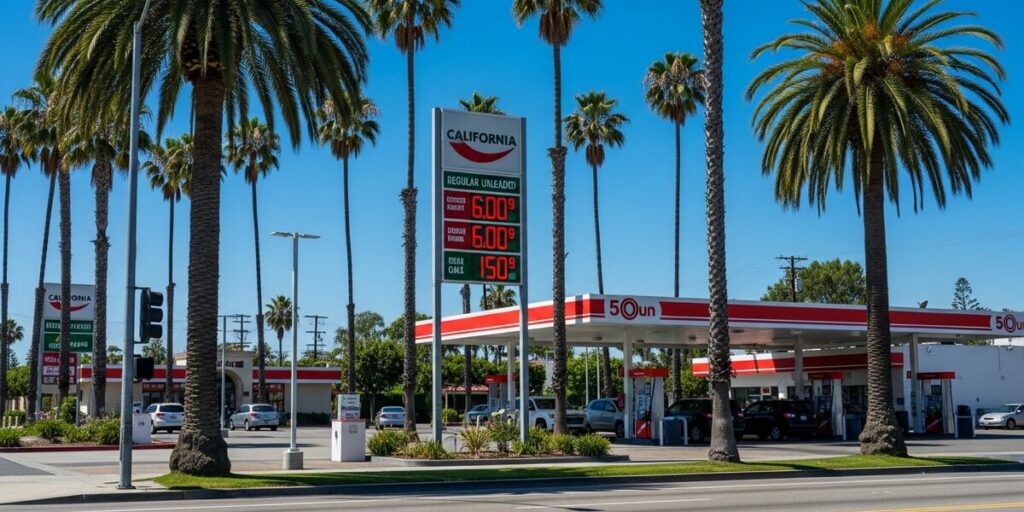
Here’s the silver lining for people who’d like to see California stop punishing itself. Gas prices are visible. They’re on giant signs at every intersection. Every driver sees them twice a day. You can’t spin them, you can’t hide them, and you can’t blame them on Russia or corporate greed when the supply chain runs through the Bahamas because your own state’s policies closed the refineries.
California Republicans have been handed the most tangible, universally understood issue in politics: the price at the pump. Every voter fills their tank. Every voter sees the number. And every voter in California is paying more — substantially more — than voters in any other state, for gasoline that traveled thousands of unnecessary miles because Sacramento’s energy policies made the direct route impossible.
Between now and November’s elections, those prices will likely rise further as more refineries close and the import dependency deepens. The issue isn’t complicated. The cause isn’t ambiguous. The solution isn’t mysterious. California did this to itself, and the voters buying $6 gasoline know exactly who to blame.
The state sits on the oil. The nation has the refineries. The tankers are available. And California chose to build a supply chain through the Bahamas instead.
That’s not energy policy. That’s performance art. And the audience is paying $80 to fill a Honda Civic.