
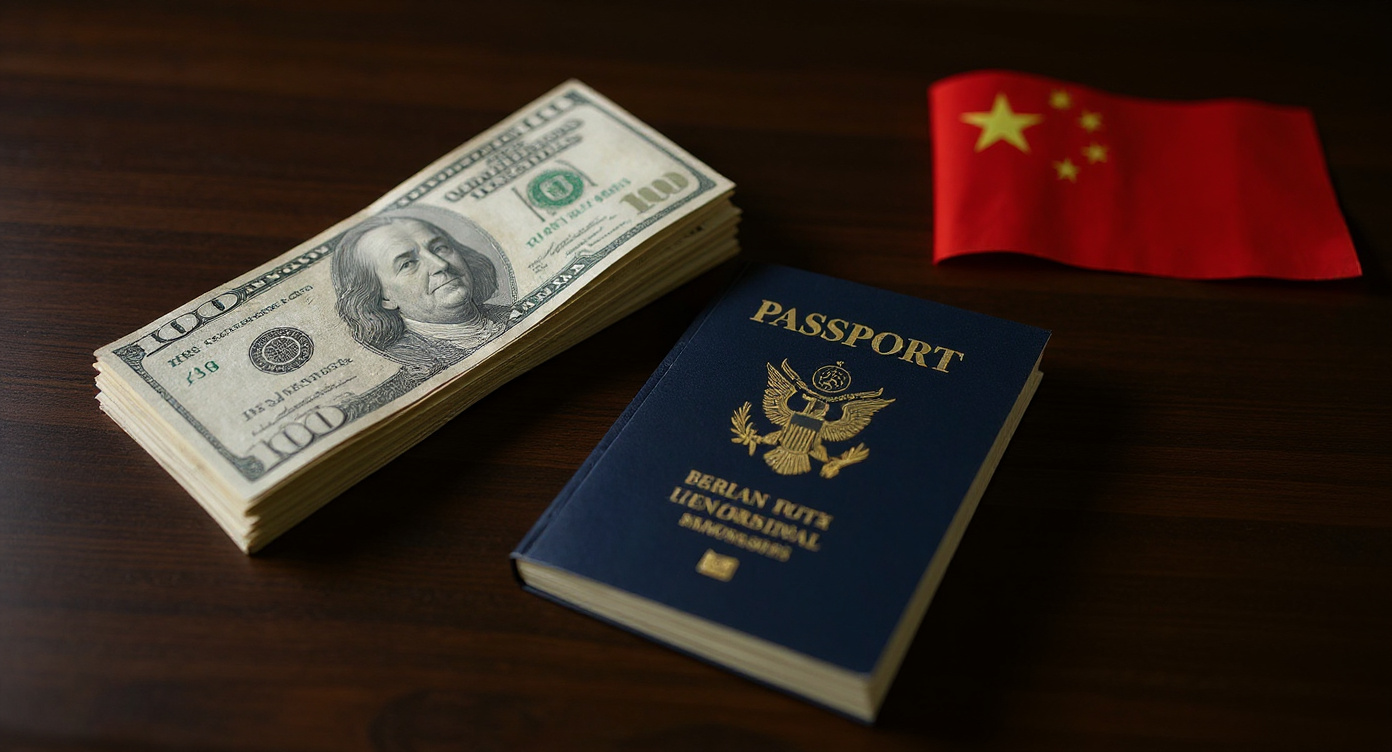
Thomas Pauken II didn't just pass secrets to Beijing. He ran a network.
For seven years, the fifty-year-old American journalist operated as an active espionage asset for China's Ministry of State Security. He recruited human sources inside the United States. He provided them with laptops and cellphones so they could transmit reports to China. He offered a U.S. government employee seeking a Trump administration position $10,000 and a SIM card in exchange for becoming a Chinese intelligence asset. And according to his handler, the reports Pauken generated went directly to Xi Jinping.
He just got two years in federal prison.
The story of how this happened is more unsettling than the headline suggests.
Pauken moved to China in 2010 and spent years embedded in Chinese state media, including the state outlet Xinhua, writing under the alias "Tom McGregor." That alias was his father's idea. Thomas Pauken Sr. is a former Reagan White House official and onetime chairman of the Texas Republican Party. He reportedly didn't want his name attached to his son's work for Beijing.
The Chinese intelligence service that eventually recruited the younger Pauken was, by multiple accounts, "obsessed" with obtaining intelligence about his father. The MSS was paying the son to spy on America while simultaneously trying to collect everything it could about the Reagan Republican who asked his son to use a fake name so the family wouldn't be associated with his China activities.
At some point the irony becomes the story.
Pauken's handler went by the name "Cathy" — a Chinese intelligence officer who directed his operations and paid him at least $100,000. Cathy told Pauken his reports were going directly to Xi Jinping. When the FBI arrested Pauken in February 2026 at a Washington, D.C. hotel, he was attempting to complete what he believed was another recruitment meeting — bringing a U.S. government employee into his network with a cash offer and communication equipment.
Federal prosecutors were precise about what this was. Assistant U.S. Attorney Theophani Stamos: "Thomas Pauken knowingly assisted a foreign adversary in actively subverting the government." Assistant Attorney General John Eisenberg: "Pauken betrayed his country for money."
At sentencing, before Judge Leonie Brinkema, Pauken offered what passed for remorse: "I learned a lot of secrets and I did tell the Chinese about these secrets. I thought I was helping, but now I realize I could've caused even more damage, including war."
Seven years of running a spy network. His conclusion, standing before a federal judge, is that it was a miscalculation.
The conviction didn't require classified documents — Pauken never held a security clearance. What he provided was something harder to audit: recruited sources, communication equipment, granular political intelligence about American institutions and the people inside them. The $100,000 his handler paid reflects what Beijing believed that intelligence was worth. A clearance badge would have made Pauken easier to find. Without one, his network ran for years.
Two years. The maximum was ten.
Pauken spent seven years recruiting human assets, providing spy equipment, and writing intelligence reports addressed — per his handler — to the general secretary of the Chinese Communist Party. All of it under an alias his own father requested so the family name would stay clean.
Twenty-four months.
Beijing is running a cost-benefit analysis on American counterintelligence. This case is a data point.