
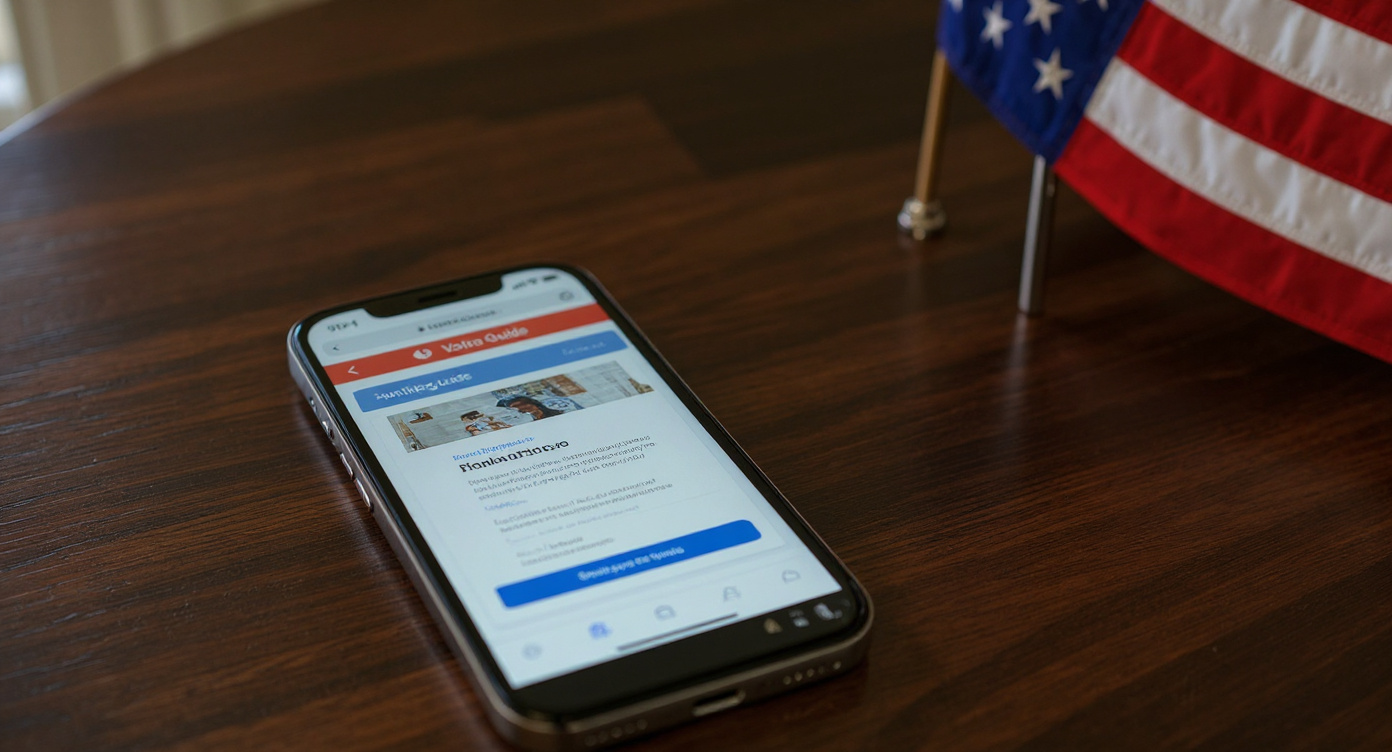
Every iPhone in America just got a push notification from Apple News: "Don't miss your chance to vote in the midterms. This personalized guide has all of the information you need." Enter your zip code, get local election coverage curated just for you. Convenient. Helpful. And about as balanced as a seesaw with Michael Moore on one end.
Robby Starbuck, a director and Visiting Fellow at the Heritage Foundation, posted his findings after plugging in zip codes from battleground districts across the country. "Under every zip code I tried," Starbuck said, "it ended up linking me to articles and media outlets that felt heavily biased in favor of Democrats." He found Democrat accomplishments highlighted, Republican candidates framed primarily around their association with President Trump, and election safeguards characterized as unnecessary. The pattern held across multiple zip codes.
The voting guide's "How to vote" tab funnels users through curated coverage that reads less like journalism and more like a midterm primer written by a DNC intern who just discovered Canva.
The design is worth noting. Apple doesn't show you a list of sources and let you pick. It decides what's relevant based on your zip code — which sounds neutral until you realize the algorithm's idea of "relevant" skews consistently in one direction. Conservative outlets aren't balanced against liberal ones. They're largely absent from the results.
This is the same company that spent years insisting its News app uses editorial judgment free from political bias. The same company that testified before Congress about its commitment to a diverse media ecosystem. The personalization isn't in the politics. It's in the packaging — your zip code just tells Apple which Democrats to promote in your area.
Apple's defense will inevitably involve the word "algorithm," as if software writes itself. But algorithms reflect the priorities of the people who build them. When every battleground zip code returns coverage that highlights Democrat achievements and frames Republicans through the lens of Trump association, that's not a bug in the code. That's the code working as designed.
The guide went out to iPhones across the country on October 9, less than a month before midterm elections. The timing is the quiet part. Apple didn't push this guide in July when voters had months to seek out other sources. They pushed it in October, when early voting is already underway in multiple states and millions of Americans are making final decisions.
The tech industry learned something from 2020: you don't need to suppress stories anymore. You just need to control the first thing people see when they go looking for information. A voting guide that looks official, feels personalized, and arrives on a device people trust is worth more than a thousand fact-checks.
Starbuck's zip code test produced the same result every time. Different district, same slant. Apple called it personalized. The only thing personal about it was which local Democrat got the favorable coverage.