
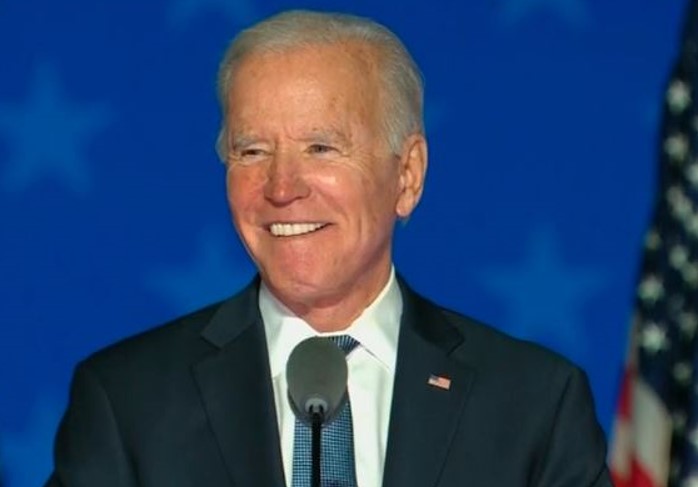
Seventy hours of audio recordings and a 117-page transcript. That's what was just released to the public after a two-year legal fight — and on those tapes, former president, Joe Biden, knowingly discusses classified national security information with Mark Zwonitzer, the ghostwriter of his upcoming memoir "Promise Me, Dad."
The recordings date to 2016 and 2017, during sessions where Biden sat down with Zwonitzer to produce his book. In an April 2017 interview, Biden discussed Afghanistan troop deployment details from 2009 and the internal deliberations around them. "The day we left would be like the day before we arrived," Biden told Zwonitzer — the conversation contained information classified under the National Security Act.
The 117-page transcript is riddled with redactions. Those blank spots aren't formatting errors. As the Oversight Project stated, "The listener shouldn't overlook the audio redactions because those redactions are intended to cover the disclosure of classified information." Every redaction marks a moment where Biden shared something that the government determined was too sensitive for public release — but apparently not too sensitive for a book writer with no security clearance.
Biden also referenced classified discussions involving the Department of Defense, the CIA, and the National Security Council. At one point on the recordings, Biden admitted his own memory limitations regarding the people involved: "I'll think of his name. I should write the names down because I keep forgetting them." He couldn't remember the names. He could, however, remember the classified details well enough to dictate them.
The recordings name former Secretary of State Antony Blinken and former Defense Secretary Lloyd Austin in the context of classified policy discussions that Biden relayed to Zwonitzer. These weren't casual mentions — they were part of detailed accounts of internal national security deliberations involving the Obama administration.
Former Special Counsel Robert Hur investigated this exact conduct. His probe produced over 100 pages of transcripts and a 40-page handwritten memorandum from Biden himself — notes that contained classified material stored with no security protocols at a private residence. Hur ultimately declined to prosecute, famously citing Biden's age and memory as factors a jury would consider sympathetic.
The FBI under Joe Biden raided Mar-a-Lago over documents stored in a locked room with Secret Service protection. Biden had classified material in handwritten notebooks, discussed classified operations on tape with a civilian ghostwriter through a company called Bentley Media Group, LLC, and the response was a special counsel report that read more like a doctor's note than an indictment.
Defenders will point to Hur's conclusion as proof that no crime warranting prosecution occurred. Which is a fascinating standard — the evidence shows Biden knowingly shared classified information with an unauthorized person, but the special counsel decided the suspect was too old and forgetful to convict. That's not exoneration. That's a prosecutor saying he couldn't sell it to a jury.