
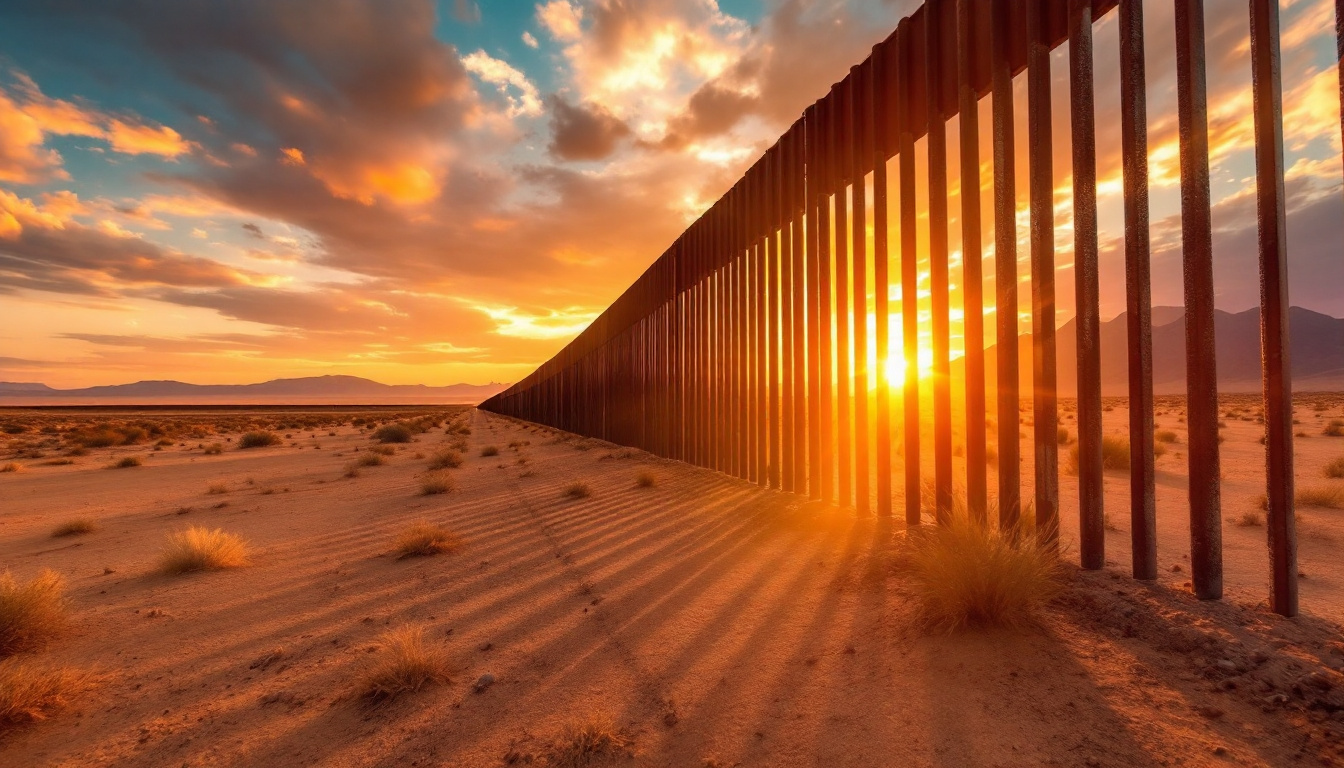
The U.S. Border Patrol recorded 98,708 southwest border apprehensions in fiscal year 2026. The last time the number was that low — 96,641 — the year was 1968, Lyndon Johnson was president, and the Vietnam War was playing out on three television channels.
Under Biden, annual apprehensions hit 1.8 million. That's a 95% drop.
DHS Secretary Markwayne Mullin released the figures on October 16th and didn't mince the delivery. "President Trump promised the American people a secure border, and the data proves he delivered," Mullin said. "The results could not be clearer: strong enforcement works."
The topline number is dramatic enough, but the supporting data is where the story turns from impressive to historic. Nationwide encounters across all categories totaled 379,243 for the fiscal year — an 88% decrease below FY2023 levels. Border Patrol achieved seventeen consecutive months of zero releases through September 2026. Not reduced releases. Not managed releases. Zero.
Drug seizures went in the opposite direction. CBP logged nearly one million pounds of narcotics seized, 63% above the four-year average. Border deaths declined 80% compared to the Biden years — a stat that rarely makes the humanitarian-concern segments on cable news, despite the people who spent four years insisting they cared most about migrant safety.
The infrastructure side tells its own story. Since January 20, 2025, Customs and Border Protection has completed 250 miles of new barrier. An October 2025 contract batch covered 230 miles of physical barrier and 400 miles of technology upgrades across 34 Smart Wall projects. Total CBP obligations from September 2025 through September 2026 hit $34.3 billion — which, at 98,708 apprehensions, works out to roughly $347,000 per arrest. That number sounds enormous until you calculate the per-encounter cost of processing, housing, and adjudicating 1.8 million people a year, plus the downstream costs in schools, hospitals, courts, and local law enforcement that states were eating on their own.
Adam Isacson, an analyst at the Washington Office on Latin America, attributed part of the decline to what he called "the disappearance of the right to apply for asylum at the border." A legal challenge from the Center for Biological Diversity landed before U.S. District Judge Kathleen Cardone in El Paso, but CBP said it remained "confident in our legal authorities to secure the border."
The objection frames enforcement as a rights violation. The numbers frame it as a policy that ended a crisis. In 2022 and 2023, annual totals exceeded 2 million. In 2026, the total didn't crack 100,000. The same agencies, the same border, the same terrain. Different instructions from the top.
Every cable news panel that spent 2019 through 2024 explaining why the border couldn't be secured has the same data in front of them now. The border wasn't an unsolvable physics problem. It wasn't a force of nature beyond any administration's control. It was a policy choice, and when the policy changed, so did the outcome.
Seventeen months. Zero releases. 98,708 apprehensions. The last president to see a number like that governed during the Tet Offensive.