
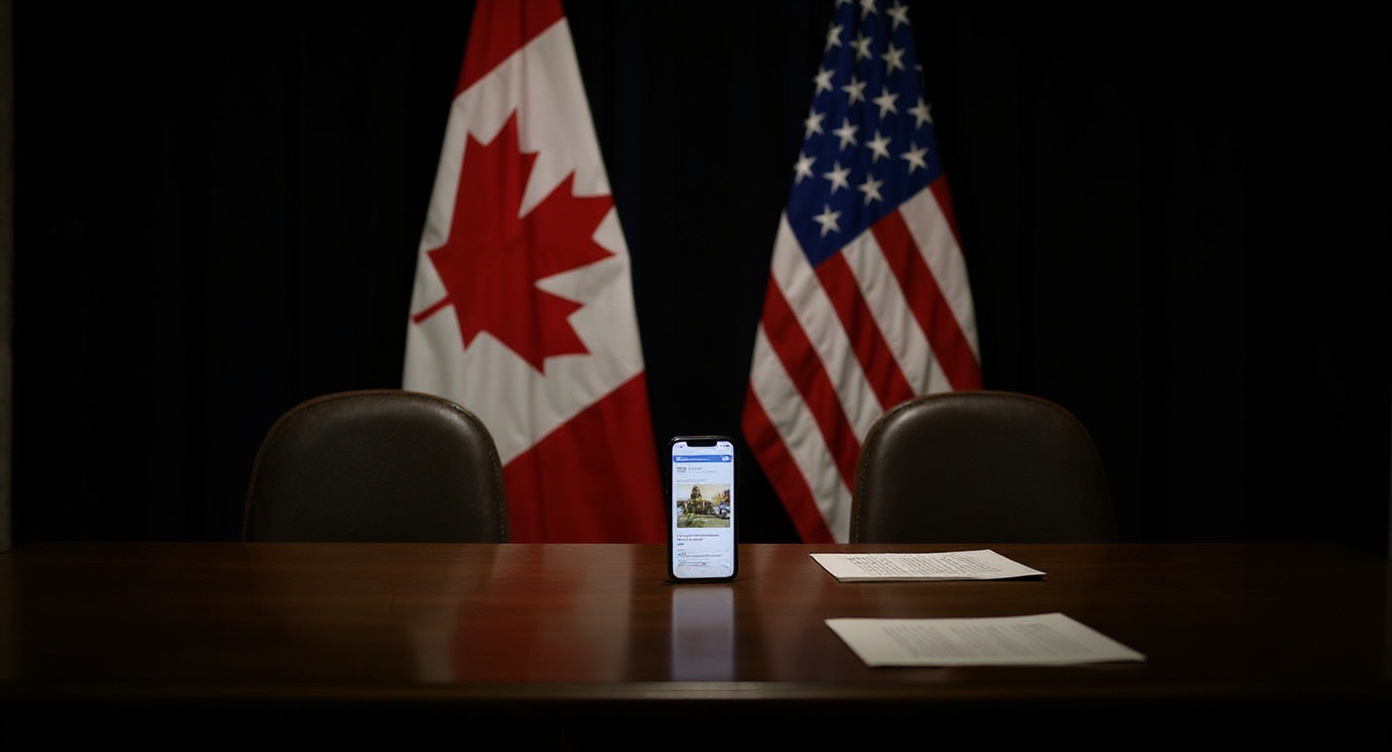
Canadian Prime Minister Mark Carney has a list of demands before he'll return to the negotiating table with the United States. Fair trade terms? Tariff schedules? Nope. He wants Americans to stop posting memes.
"When the Americans stop doing memes, stop throwing shade, stop trying to be tough and start being serious about having those discussions, we can have those discussions," Carney told reporters on September 1. That's the leader of a G7 nation, complaining about internet jokes.
The context here matters. Trade talks between the U.S. and Canada collapsed on August 21 after weeks of negotiations failed to produce a deal. President Trump slapped 50% tariffs on $20 billion worth of Canadian goods. Carney vowed to match those tariffs "dollar for dollar," with $20 billion in retaliatory tariffs on American products set to kick in September 8. Commerce Secretary Howard Lutnick said he met with Canadian Trade Minister Dominic LeBlanc "at least 10 times in the last month" and spoke to Carney himself "twice in the 24 hours before this ended. Twice."
So the Americans showed up. They negotiated. It fell apart over substance — autos, cultural protections, and Canada's insistence on maintaining independent trade deals. But when Carney went in front of cameras to explain the breakdown, he didn't talk about tariff rates or trade balances. He talked about memes.
The specific meme that apparently broke the Canadian government's spirit came from U.S. Secretary of War Pete Hegseth, who posted an image on X of two female Canadian military cadets with the caption "This is real." The post racked up nearly 10 million views. Carney called it "beneath their office."
Treasury Secretary Scott Bessent wasn't exactly sympathetic. "It's very unfortunate that Prime Minister Carney has turned this into a political shouting match," he said. "I mean, we're not at war with Canada." Then Bessent twisted the knife: "How are we going to be at war with Canada? What, they're going to take their two submarines from the Edmonton Mall and sic them on us?" For the record, the submarines he's referencing were a ride at West Edmonton Mall. The ride closed in 2005.
Bessent also pointed out the obvious math problem with Carney's tough-guy routine. "I don't think you can be in a tit-for-tat with someone who's 13 times larger than you are," he told CNBC. Carney's response to governing an economy one-thirteenth the size of America's was to demand that the bigger economy be nicer to him online.
There's a reason for the theatrics. Carney rode an anti-Trump, anti-American wave into office, and it's working domestically. His Liberal Party holds 173 of 343 seats in the House of Commons. They just won three special elections, including flipping the Quebec riding of Chicoutimi-Le Fjord, where the Conservatives dropped to third place. Liberal MP Hedy Fry captured the mood: "The United States is getting a message tonight. Our leader has the support of the Canadian people."
Which tells you everything about what Carney is actually doing. He doesn't need a trade deal. He needs a villain. Trump's tariffs, Trump's Lake Ontario executive order renaming it "Lake America," Trump's social media posts — every provocation is another campaign ad. "He came to power on an anti-American, anti-Trump agenda," Bessent said, arguing Carney prioritizes "what's best for the Liberal Party, what's best for Mark Carney" over what's best for Canadians.
Carney insists the opportunity for a "mutually beneficial trade deal that respects Canadian sovereignty" still exists. Maybe it does. But sovereign nations usually negotiate over tariff schedules and market access, not over who's being mean on the internet.
Fifty percent tariffs on $20 billion in goods take effect in five days. Canada's economy is one-thirteenth the size of ours. And their prime minister's precondition for talking is that we stop being funny.