
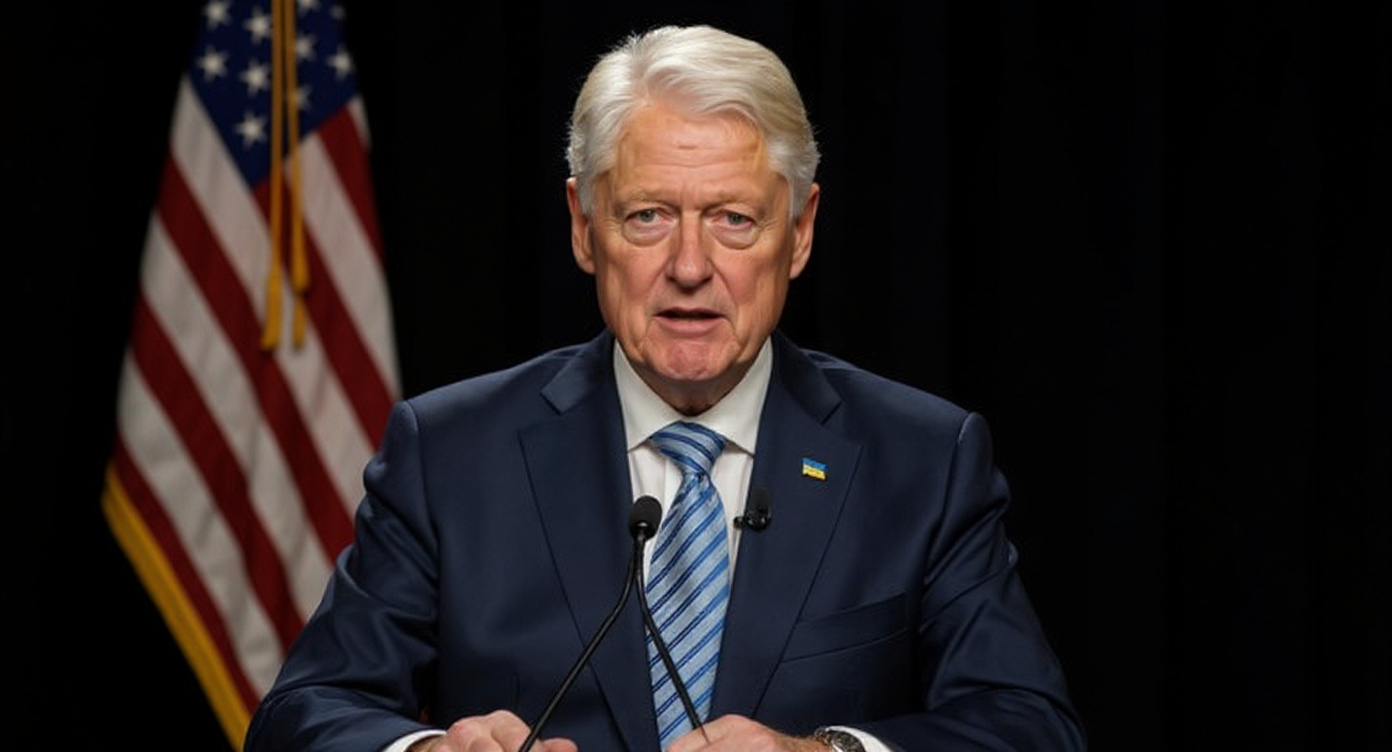
On September 10, 1998, a memo landed on the President's desk predicting Osama bin Laden would "strike the US on its own soil." Three years later, nearly 3,000 Americans were dead. And last week — on the 25th anniversary of that massacre — the man who was president when the memo arrived sat down for a radio interview and explained why nobody did anything about it.
The CIA killed the plan. His words, not ours.
Former President Bill Clinton appeared on WABC Radio's "Cats Roundtable" with host John Catsimatidis and dropped what should be a five-alarm political scandal with all the emotional weight of a man ordering a club sandwich. "I had authorized the CIA to try to take him out," Clinton said. "I was scared, and I was mad because we tried to get him before, and the CIA at the last minute killed the plan that I think might well have succeeded."
That plan, according to Clinton, was scrapped because the CIA "were afraid that if they missed, they'd kill a lot of innocent civilians." So the most dangerous terrorist on the planet walked. The intelligence community had their shot, and they chose caution over action. The Twin Towers were still standing when that decision was made.
Clinton even acknowledged he knew exactly who was responsible the moment the planes hit. "I immediately said that bin Laden did this," he told Catsimatidis. "I wish we had done even more to get him. I always thought he was our biggest threat."
The timing of this confession lines up with more than just the anniversary. The CIA released over 100 pages of declassified presidential intelligence briefings this month, including one from August 6, 2001 — just weeks before the attack — stating bin Laden was "determined to strike." Another assessment dated August 28, 2001 detailed active Al-Qaeda operations. The paper trail was long before the towers fell. The warnings were specific. The bureaucracy shrugged.
The quote that should haunt every desk at Langley is the simplest one: the CIA "killed the plan." The agency made a deliberate institutional choice to let the man who would kill thousands walk because the operation carried risk. Every military and intelligence operation carries risk. That's what the word "operation" means.
The civilian-casualty argument sounds reasonable in a vacuum. It evaporates when you count the civilians who died on September 11th because the shot wasn't taken. The risk calculus wasn't wrong in hindsight — it was wrong at the time, and Clinton's own words confirm he thought so. He authorized lethal action. The agency overrode him. And he let them.
That's the part nobody in Washington wants to discuss. A sitting president gave the green light to eliminate the most wanted man on earth, and an unelected intelligence bureaucracy vetoed it. Clinton didn't fire anyone. Didn't go public. Didn't force the issue. He "was mad" — and then moved on.
Twenty-five years later, the families who buried someone from the World Trade Center, the Pentagon, or a field in Pennsylvania got to hear the man who could have prevented it explain that he really did try, honestly, but the agency said no. He delivered this admission from a radio studio, not a congressional hearing. No one was under oath. No one asked a follow-up about accountability.
Clinton told Catsimatidis he believes future attacks are still possible. "I think it's entirely possible... we have to stay on guard," he said.
Staying on guard would have been useful in 1998. Instead, a memo predicted the attack, the president authorized the response, the CIA cancelled it, and 3,000 people died on a Tuesday morning in September. That's not a failure of intelligence. That's a successful bureaucracy doing exactly what bureaucracies do — protecting the institution instead of the country.