
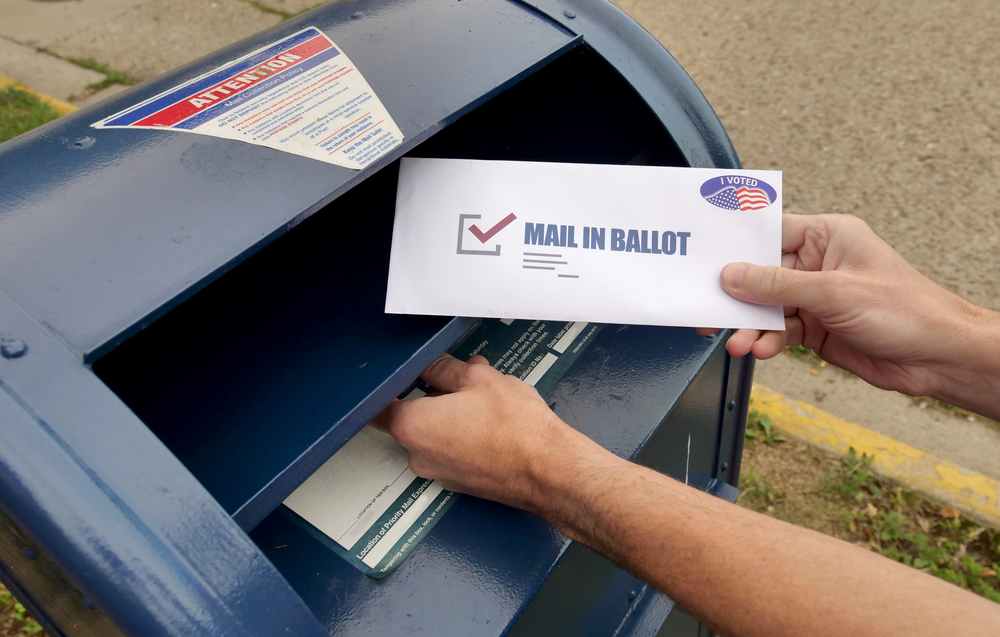
In mid-September 2024, 34 percent of registered Democrat voters told pollsters they planned to vote by mail in the upcoming election. One year later, that number is 23 percent — an eleven-point collapse in the voting method Democrats spent half a decade insisting was the backbone of American democracy.
Nobody made them stop. They just stopped.
The numbers come from the latest NBC News poll, conducted September 11-15, 2026, by Hart Research Associates and Public Opinion Strategies, surveying 1,000 registered voters with a margin of error of ±3.1 percentage points. Among Democrats, 36 percent now say they plan to vote early in person — up six points from the same period in 2024 — and another 36 percent plan to show up on Election Day itself. Only 5 percent said they were uncertain or unlikely to vote, as reported by Breitbart.
The shift isn't limited to one party. Among independent voters, mail-in plans dropped from 28 percent in 2024 to 25 percent in 2026, with 28 percent planning early in-person voting and 37 percent aiming for Election Day. Republicans, predictably, remain the most committed to showing up in person — 53 percent plan to vote on Election Day, with only 16 percent opting for mail-in ballots.
Jeff Horwitt, the Democrat pollster from Hart Research Associates who helped conduct the survey, framed the data in terms of what it means for election night itself. "Among early voters, Democrats have a 23-point advantage on the congressional ballot, but among Election Day voters, Republicans have a 14-point advantage," Horwitt said. "So, if a blue wave comes in, it will hit land at different times, and even on different days or weeks."
That's the Democrat pollster's own read — not a red wave warning, just a quiet admission that early returns will skew blue and the GOP strength arrives when people actually walk into a polling place. The interesting part isn't the partisan split. It's that Horwitt is already building the framework for why early election night numbers might look different from the final count. We've seen that playbook before.
The timing of the poll lands on something worth noting. The Supreme Court blocked a Trump executive order on mail ballot criteria on the evening of September 14 — right in the middle of the survey window. That means at least some respondents answered after the legal fight over mail-in rules was back in the headlines, and Democrats still moved away from mail voting anyway.
Remember, this was the hill. Mail-in voting was the safeguard. Questioning it made you an insurrectionist. Wanting voter ID for absentee ballots was Jim Crow 2.0. States that tightened mail-in requirements after 2020 were accused of suppressing the vote. Every election integrity measure was treated as an attack on democracy itself.
Now, without any public reckoning or apology tour, a third of the Democrats who planned to mail it in last cycle have decided they'd rather just go vote. The method they swore was essential turned out to be optional. The "voter suppression" they warned about was apparently just... voting.
Eleven points in twelve months. No policy change forced it. No law took it away. They walked away from the mailbox and picked up their car keys.