
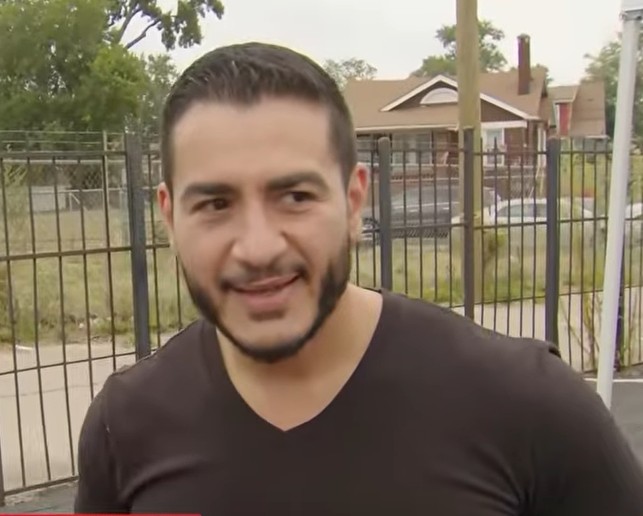
Michigan Democratic Senate nominee Abdul El-Sayed went on Jesse Watters Primetime Monday night and, when asked whether he supports surgical gender procedures on minors, responded by asking Jesse Watters if he's circumcised.
That happened. On national television. From a man running for the United States Senate.
El-Sayed, a physician by training, apparently decided the best way to handle a question about irreversible genital surgeries on children was to compare them to circumcision. "Circumcision is surgery on a kid's ding-a-ling," El-Sayed told Watters, using the host's own phrasing.
Watters wasn't buying it. "Circumcision is different than castration," he replied. Then, after El-Sayed continued deflecting: "Abdul, Michigan's not going for that. That is sick stuff."
The clip aired August 24 and immediately became the most-discussed political exchange of the week. The interview covered healthcare costs, federal spending, and boys competing in girls' sports — and on every topic, El-Sayed dodged. "You have not asked me one time about the issues that people actually care about," he told Watters at one point. An interesting complaint from a man who had just spent two minutes talking about circumcision on national television.
The fallout was instant and bipartisan.
Andrew Kolvet, a spokesperson for Turning Point USA, posted the clip with the observation that should have been obvious before El-Sayed walked into the studio: "Circumcision and castration are not the same, Abdul!"
New York civil rights attorney Andrew Laufer posted that he found himself "actually agreeing with Jesse Watters." When a civil rights lawyer in Manhattan is siding with the host of Jesse Watters Primetime, the talking point has collapsed at a structural level.
Even voices on El-Sayed's own side of the aisle saw the wreckage. Journalist Ryan Grim, whose progressive credentials are unimpeachable, said flatly: "This talking point isn't it." Journalist and activist Melissa Chen went further: El-Sayed "just can't say it out loud without pissing off the trans activists" — meaning he knows the position is politically toxic but can't abandon it without losing his base.
A senior policy director at Do No Harm, a medical watchdog organization that opposes ideological capture in healthcare, put it in electoral terms: "Candidates who choose to die on this hill will deserve their election losses."
The circumcision comparison deserves more than mockery. It deserves examination, because it reveals exactly how this candidate thinks.
A standard circumcision is a minor procedure performed on newborns, almost always at the parents' request, with negligible medical risk and no impact on future reproductive function. Gender surgeries on minors involve removing or permanently altering the reproductive organs of adolescents experiencing psychological distress — procedures multiple European countries have now restricted after reviewing the clinical evidence. A physician understands the distinction. El-Sayed has a medical degree. He deployed the comparison anyway.
That is a choice. And it tells you everything about how he processes the issue. Acknowledging any meaningful difference between those two procedures would require admitting that the government has a legitimate interest in protecting children from irreversible decisions. El-Sayed cannot make that admission without losing the DSA base that put him on the ballot. So he asked Jesse Watters about his circumcision instead.
There's a pattern that extends beyond one bad interview. El-Sayed has spent recent weeks lurching from one self-inflicted problem to the next — claiming African heritage because his father is Egyptian, scrambling to distance himself from anti-Jewish comments by streamer Hasan Piker, and now equating a neonatal procedure with surgically removing healthy reproductive organs from adolescents. Each incident follows the same arc: progressive orthodoxy collides with basic common sense, and El-Sayed picks orthodoxy.
Watters asked a straightforward question. El-Sayed made it weird, made it personal, and hoped the deflection would do the work of an answer.
The DSA base required it. Michigan voters in November get to decide if that was worth it.