
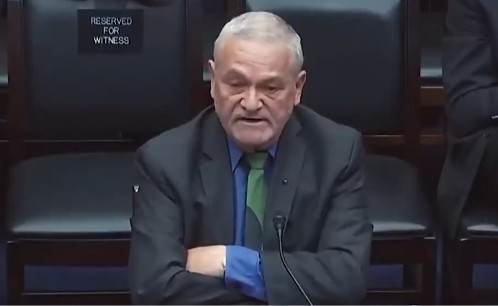
David M. Morens, a 78-year-old former senior advisor to Dr. Anthony Fauci at the National Institute of Allergy and Infectious Diseases, pleaded guilty on Monday to conspiracy to defraud the United States. He faces up to five years in federal prison.
Not "mishandling documents." Not "failing to comply with records retention." Conspiracy to defraud the United States. That's the charge. That's what a federal court now has on the record.
According to the Department of Justice, Morens and at least two unnamed co-conspirators worked to "counter the narrative that COVID-19 leaked from a lab." The method was straightforward: Morens used his personal email account instead of his NIH-issued one to conduct official business, specifically to dodge Freedom of Information Act requests. Government communications on government servers are subject to FOIA. Personal Gmail accounts are not. Morens knew this. Prosecutors say that was the point.
The DOJ's case paints a picture of a senior federal official who understood exactly which conversations needed to stay off the books. These weren't casual lunch plans routed through a personal inbox. These were communications about the origins of a virus that killed more than a million Americans, conducted on channels specifically chosen because the public would never be able to read them.
The incentives weren't subtle either. Prosecutors described Morens receiving wine and meals at Michelin-starred restaurants — courtesies extended in connection with the grant titled "Understanding the Risk of Bat Coronavirus Emergence." That's the actual name of the grant. The one that funded research into bat coronaviruses at a time when the entire federal health apparatus was publicly insisting that bat coronavirus research had nothing to do with the pandemic.
The usual defense in cases like this is that the accused was simply a bureaucrat caught in a paperwork mix-up. That framing gets harder to sustain when the paperwork mix-up involves a deliberate channel switch to avoid federal transparency law, and the bureaucrat in question sat directly beside the most powerful public health official in the country for decades.
Morens spent his career at NIH and NIAID — not as a peripheral figure, but as a senior advisor with direct access to Fauci. The plea doesn't name Fauci. It doesn't need to. What it establishes is that someone in Fauci's inner circle has now admitted, under oath, in federal court, that he participated in a conspiracy against the United States government. The conspiracy involved hiding information about COVID origins from the American public. Conspiracies, by nature, involve more than one person.
Sentencing is pending before a federal district judge. The statutory maximum is five years. Whether Morens cooperates further — and who else might be implicated — remains to be seen.