
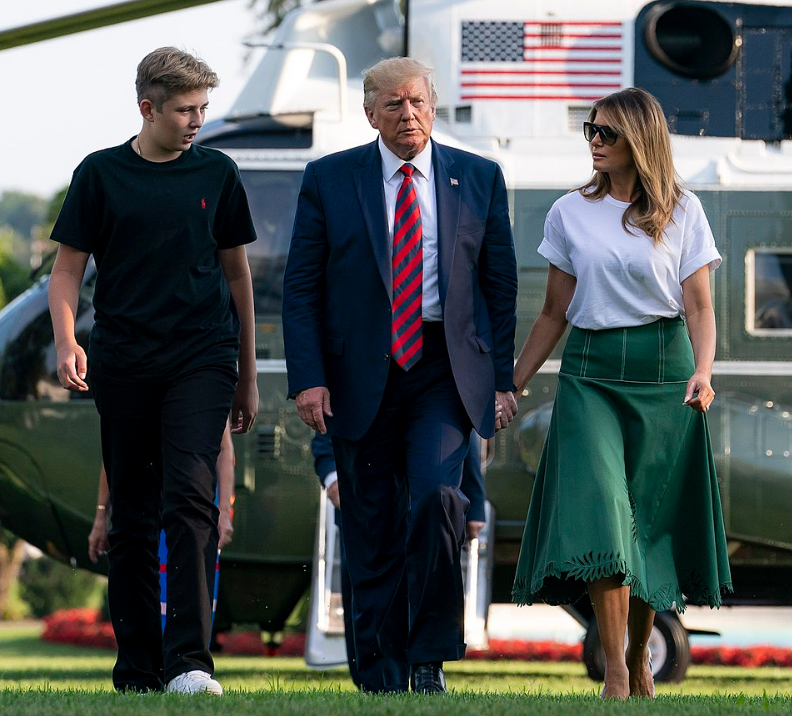
Before the FBI raided Mar-a-Lago on August 8, 2022, agents obtained a pen register and trap-and-trace device on the phone of Susie Wiles — Donald Trump's co-campaign manager. Every number she called. Every number that called her. Logged by the federal government. They also tracked Melania and Barron Trump's movements and location in the weeks before agents showed up at the family's Palm Beach estate.
This wasn't an investigation. It was a surveillance operation with a codename: Operation Plasmic Echo.
Newly declassified FBI memos reveal the architecture of what the Bureau built before that raid — and who built it. The answer to the second question kills the "rogue agents" defense permanently.
On March 24, 2022, FBI Director Christopher Wray sent a memo to Deputy Attorney General Lisa Monaco. Monaco's handwritten note on the document read: "Merrick, I recommend you approve, Lisa 3/25/22." One day. That's how long it took the number-two official at the Department of Justice to recommend that Attorney General Merrick Garland green-light the operation targeting a former president. This came from the top. Wray to Monaco to Garland, in writing, with dates.
The FBI set a deadline of May 31, 2022 for completing preliminary investigative tasks. By July 13, 2022, an internal FBI memo from the Washington Field Office stated plainly that the Bureau "does not believe...that we have established probable cause for the search warrant at Mar a Lago." The agents on the ground — the ones actually doing the work — said they didn't have it.
They raided anyway. Twenty-six days later.
The scope of the surveillance went beyond Trump himself. Wiles' phone records. Melania's schedule. The former (at the time) First Lady's movements logged like she was a person of interest in a narcotics case, not the wife of a president. The memos show agents were tracking Trump family travel broadly, building a picture of who was where and when.
White House spokeswoman Lauren Bis remarked, "Jack Smith's surveillance operation was a disgraceful abuse of government power. Spying on political opponents is weaponization of law enforcement, plain and simple. Those responsible must be held accountable."
The "rogue field office" narrative was always convenient. It let Washington pretend that overzealous agents in Florida got carried away, that leadership was uninvolved, that the system worked the way it was supposed to and a few bad actors overstepped. The memos destroy that. Wray initiated. Monaco recommended in writing within twenty-four hours. Garland approved. The Washington Field Office raised doubts about probable cause. Leadership overrode those doubts and sent agents through the front door of a former president's home anyway.
Imagine the Washington Post's reaction if declassified documents showed the Trump administration had obtained surveillance devices on a Biden campaign manager's phone, tracked Jill Biden's movements, and logged the Biden family's travel — all before executing a raid that the FBI's own field office said lacked probable cause. We wouldn't be reading about it in declassified memos four years later. We'd have heard about it every night for a year.