
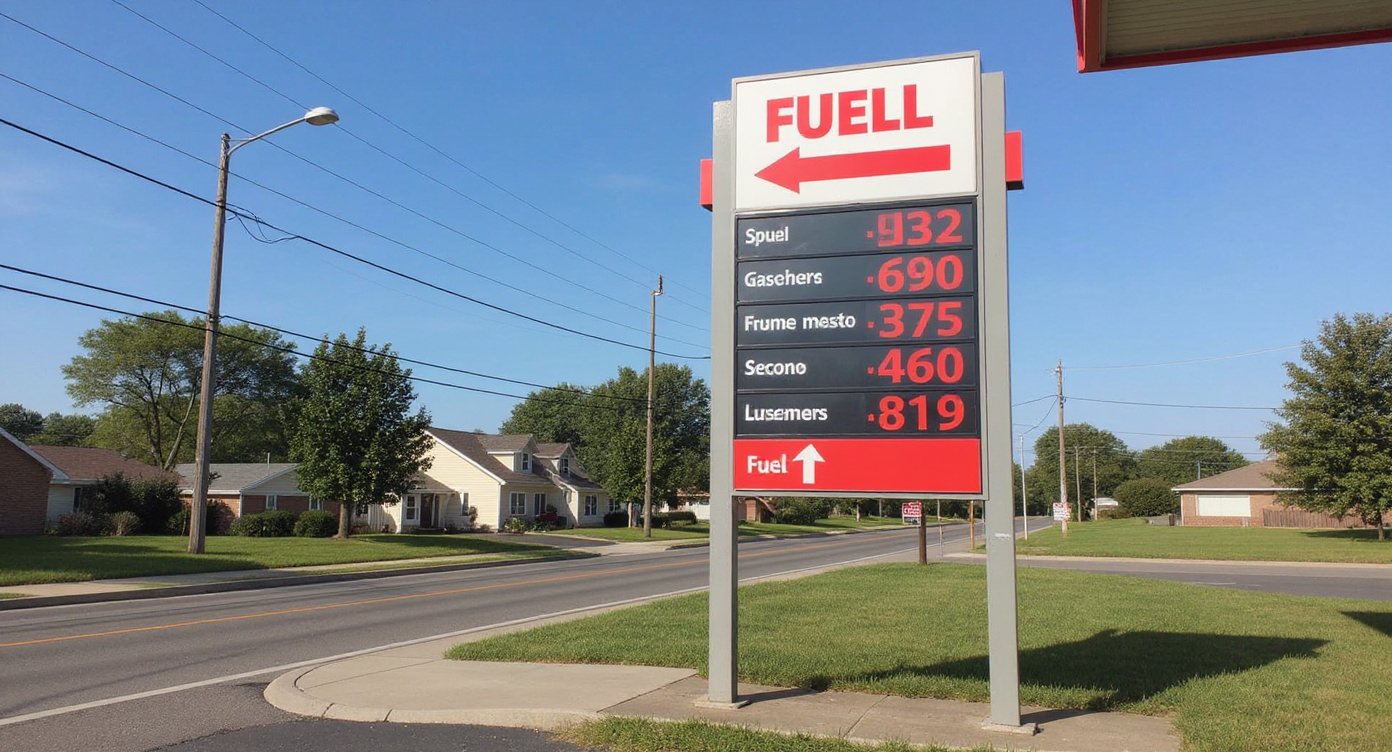
Americans have been paying over $4 a gallon at the pump for months, and not a single member of Congress lifted a finger to fix it. The Federal Reserve didn't fix it. The Department of Energy didn't fix it. Donald Trump fixed it — with a peace deal and a handshake — and crude oil is now tumbling below $81 a barrel as the Strait of Hormuz reopens to tanker traffic.
Call it the Trump Tax Cut that nobody in Washington had to vote on.
The US-Iran peace framework announced on Sunday sent oil prices sharply lower overnight, with Brent crude sliding to about $80 a barrel. Analysts are now projecting meaningful relief at the pump in coming weeks as tankers resume normal transit through the Strait of Hormuz — the narrow waterway that handles roughly a fifth of global oil supply and had been choked off during the standoff with Iran.
For every family filling up the minivan, every trucker running coast-to-coast routes, every small business owner whose margins have been eaten alive by fuel costs — this is real money. Not theoretical savings buried in a 4,000-page appropriations bill. Not a tax credit you need an accountant to find. This is the price on the sign at the gas station going down, and everybody can see it.
Now let's take a little trip down memory lane.
Remember when Joe Biden's answer to high gas prices was to drain the Strategic Petroleum Reserve like a college kid burning through his savings account? Biden dumped roughly 180 million barrels of emergency oil reserves — reserves meant for actual national emergencies — just to keep pump prices from completely destroying Democrats before the 2022 midterms. It was a political band-aid on an arterial wound, and we're still paying for it. The SPR sits at historically low levels to this day.
Biden's energy policy was simple: beg OPEC, blame oil companies, drain the reserves, repeat. Four years of that genius strategy left us more dependent on foreign oil and more vulnerable to exactly the kind of supply disruption the Strait of Hormuz blockade represented.
Trump's approach? Make the deal. Open the strait. Let the market do the rest.
The difference between the two philosophies couldn't be clearer. One president spent four years managing decline. The other just eliminated a major global supply bottleneck with a single diplomatic stroke, and oil markets responded in real time.
Gas above $4 a gallon isn't just an inconvenience — it's a regressive tax on every working American. It hits the single mom commuting 45 minutes to her shift. It hits the farmer running diesel through harvest. It hits the delivery driver, the plumber, the electrician. Every cent matters, and those cents have been piling up for months.
Analysts are already projecting that sustained crude prices below $83 could translate to meaningful relief at the pump within weeks — not months, weeks — as Hormuz shipping lanes normalize and supply flows resume.
We spent four years under Biden watching gas prices spike, listening to press secretaries explain why it was actually Putin's fault, and being told to buy a $60,000 electric car if we didn't like it. We spent months watching the Strait of Hormuz crisis drive prices even higher while the "experts" wrung their hands about escalation.
Then Trump made a deal on his birthday and the price of oil fell off a cliff.
That's not spin. That's your gas receipt next week.