
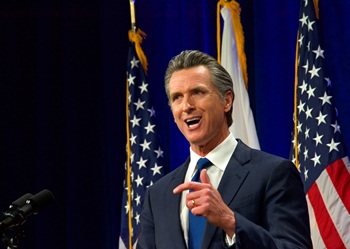
A year and a half after wildfires leveled Pacific Palisades and exposed every failure of California's emergency infrastructure, Governor Gavin Newsom stood in front of cameras on July 22 and said this: "We are a model for the globe on fire management."
The rebuilding from those fires still isn't finished. Heck, it's barely even started.
Newsom wasn't joking either. He really believes he's some kind of great leader despite watching large swathes of his state burn down and hundreds of thousands of residents lose their homes. "I can say this with absolute conviction. We don't imitate; we're a model for others," he declared. Then he kept going: "We have people coming from all over the United States and around the globe to look at what California is doing in orbit, in the air, and on the ground."
The fires at the end of 2024 burned through neighborhoods that had been flagged for years as vulnerable. Reservoirs lacked adequate water. Brush and old growth that should have been cleared sat untouched. The response wasn't slow because of some unforeseeable disaster — it was slow because California had neglected the basic maintenance that states like Virginia handle as routine. Residents watched their homes burn on live television while hydrants ran dry.
That's the track record Newsom is now packaging as a global model.
Meanwhile more than 200,000 Californians were forced from their homes. About 70% of those residents have remained displaced. And approximately 59 square miles were incinerated, resulting in over 400 deaths. 31 of those are directly attributed to the wildfires. The others are the result of heart and lung conditions aggravated by the smoke and stress, or breakdowns in health care and mental health care systems.
The rhetorical move here is familiar. Take the thing you failed at most visibly, declare yourself the leader in it, and count on the liberal press not to ask follow-up questions. Newsom has been running this play for years — on homelessness, on housing costs, on crime, on the state budget deficit. The pattern is always the same: catastrophe, followed by a press conference, followed by a claim that California is actually pioneering solutions the rest of the country should copy.
Notice what Newsom didn't say. He didn't cite the number of acres cleared. He didn't point to reservoir capacity improvements. He didn't reference a single policy change, a budget line, or a measurable outcome. He said people are "coming from all over" to look at what California is doing. That's tourism, not governance.
That's because he can't. California's recover has been super slow. More than 17,000 homes were burned down completely, seriously damaged or rendered uninhabitable. The ash and debris the wildfires left blanketed on the communities in its wake were laden with toxic material because most homes built before 1975 were constructed with lead paint or built with asbestos-containing materials.
Canada has sent teams to study California's wildfire problem. So have other states. That's not because California is a model. It's because California is a cautionary tale, and professionals in the field want to understand what went wrong so they can avoid repeating it.
Newsom's conviction isn't the issue. He's always had conviction. He had conviction when he dined at the French Laundry during his own COVID lockdowns. He had conviction when he declared a homelessness emergency and the numbers went up. Conviction without results is just a man talking into a microphone.
Pacific Palisades residents are still waiting on permits to rebuild their homes. The governor is on television telling the world he's got fire management figured out.