
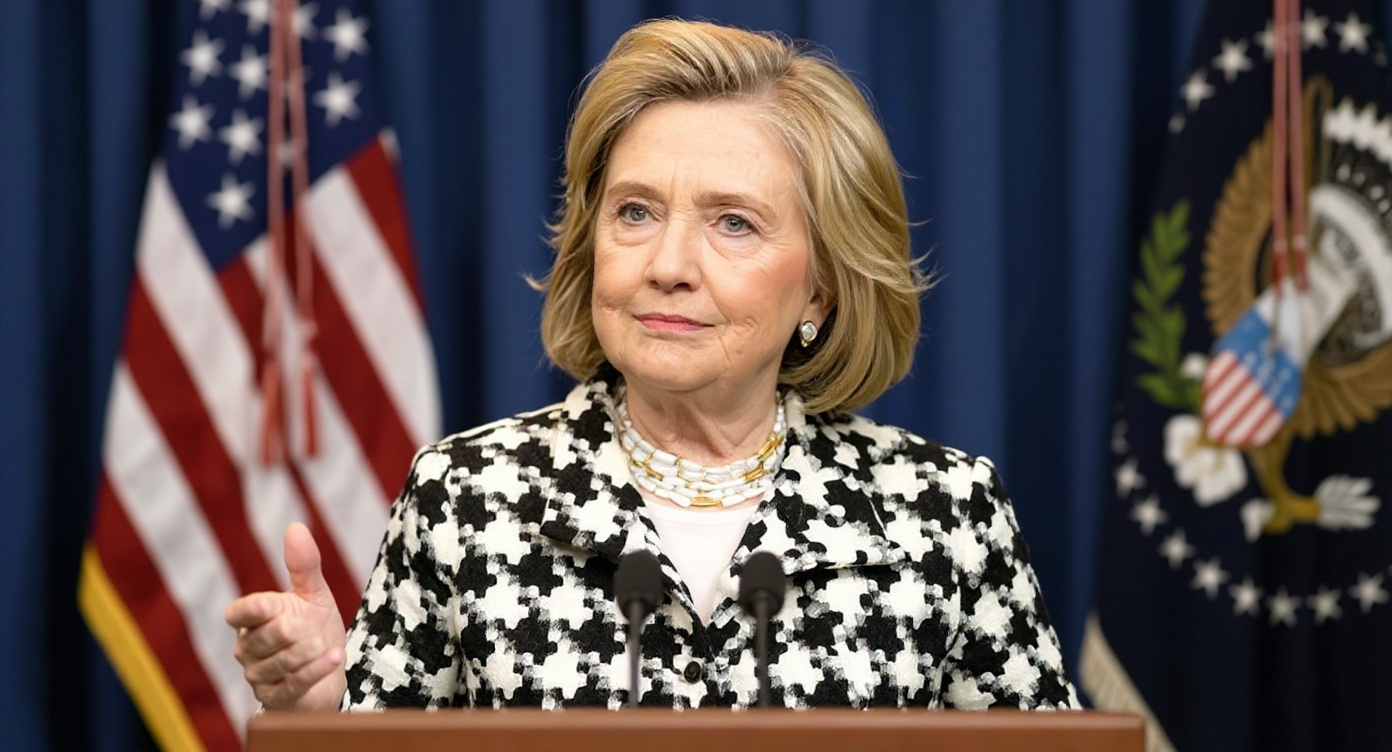
Hillary Clinton, former Secretary of State and U.S. Senator from New York, went on camera this week to declare that the Trump administration's deportation efforts are "a systematic effort to try to rid the country of people that don't look like them."
She voted for the Secure Fence Act of 2006.
The clip shows Clinton drawing a careful distinction between what she claims to have supported during her Senate tenure and what's happening now. "When I was in the Senate, I was for deporting criminals," Clinton said. "That's not what this is about."
Then came the turn: "There's ways of dealing with what they said they were going to deal with. That was never the real motive."
So the real motive — according to the woman who spent eight years in the U.S. Senate voting for border enforcement measures — is racial animus. Not the enforcement of federal immigration law. Not the removal of people who entered the country illegally. The skin color of the people being removed.
This would be a bold claim from anyone. Coming from Hillary Clinton, it requires a specific kind of amnesia. On September 29, 2006, she was one of 80 senators who voted yes on the Secure Fence Act, which authorized $1.4 billion for 700 miles of physical fencing along the southern border. The bill passed 80-19. It wasn't close. And the people on the other side of that fence weren't being sorted by complexion — they were being stopped because they were crossing illegally.
Clinton didn't object to that framework at the time. She co-sponsored enforcement legislation. She talked tough on criminal deportation. She stood next to colleagues who used the word "illegal" without flinching. That was the Democratic Party's immigration posture for decades — enforce the law, secure the border, and fight for a path to citizenship for people who followed the rules.
Now that same enforcement is racist.
The accusation itself tells you more about Clinton's political calculation than about immigration policy. "People that don't look like them" reduces every illegal immigrant to their race and every enforcement action to bigotry. It assumes that the only possible reason to deport someone who broke federal law is hatred. It erases the law entirely.
It also assumes something uglier: that illegal immigrants are definitionally non-white, and that enforcing borders is therefore an act of white supremacy. Clinton said the quiet part out loud — the part where Democrats view entire populations as racial categories first and legal individuals second. She's the one sorting people by appearance. The immigration system sorts them by paperwork.
Clinton's pivot didn't happen in a vacuum. She's back in the public eye with a new podcast called "High Stakes," co-hosted with tech journalist Kara Swisher, timed to land right before the 2026 midterms. The deportation comments fit the pattern: surface just often enough to remind the base you exist, say something inflammatory enough to generate clips, and retreat before anyone asks follow-up questions.
No one asked her which deportations she considers acceptable and which ones cross into racism. No one asked where the line is between "deporting criminals," which she claims to support, and "a systematic effort" based on race. No one asked why the Secure Fence Act wasn't racist when she voted for it but the enforcement of existing law is racist now.
The $1.4 billion she approved in 2006 built fencing that's still standing along parts of the southern border. The 80-19 vote she cast is still in the Congressional Record. The distinction she's drawing — between her enforcement and their enforcement — has exactly one variable, and it isn't policy.
It's who's in the White House.