
At 5:11 p.m. Eastern on July 15, the House of Representatives passed H.R. 8595 by a vote of 217-209, folding the SAVE America Act's national voter ID requirements into a broader national security spending bill. Five members didn't vote. Every single Democrat who showed up voted no.
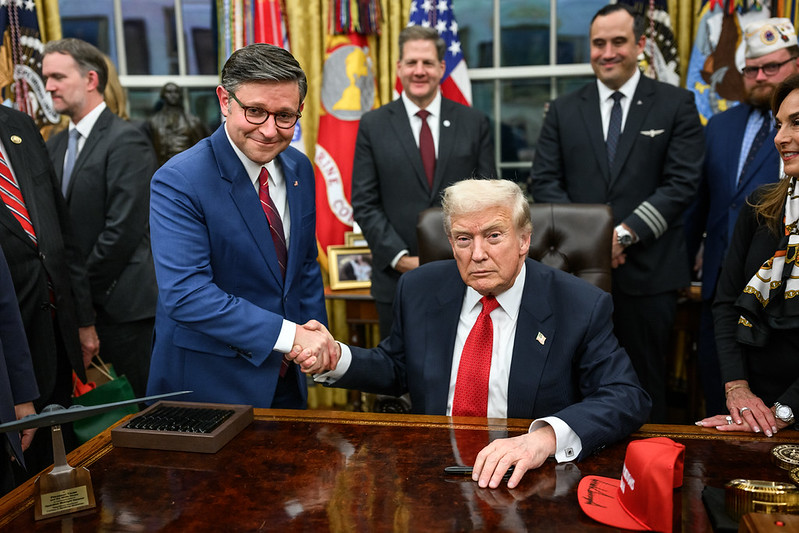
Speaker Mike Johnson pushed the bill to the floor despite a turbulent few weeks in the Senate following the passing of Sen. Lindsey Graham, which has scrambled the upper chamber's dynamics. The rule to bring the bill forward barely cleared, passing 215-211 — a margin so thin you could read the newspaper through it. But it cleared.
The core of what Democrats are fighting here is straightforward: documentary proof of citizenship to vote and basic voter identification requirements. That's the SAVE America Act. The same concept that polls north of 70% with the American public. The same concept that virtually every functioning democracy on the planet already requires.
But according to the Democratic caucus, asking someone to prove they're a citizen before casting a vote in an American election is an unacceptable burden. All 208 of them agreed — not a single defector.
"Safeguarding American elections and strengthening our national defense are the most basic responsibilities of Congress," Speaker Johnson said after the vote. He's right. And he just got 217 colleagues to agree with him.
Rep. Jared Golden of Maine — one of the Democrats who represents a district Trump won — voted no anyway. Rep. Thomas Massie, the Kentucky Republican who has made a second career out of being the lone dissenter, voted yes this time. Even Rep. Kevin Kiley of California, now caucusing as an independent, came aboard.
The opposition's argument hasn't changed in years. Voter ID is "racist." Voter ID is "suppression." Voter ID is a solution in search of a problem. They've been saying this while every other developed nation — Canada, France, Germany, India, Mexico — requires identification to vote without anyone calling it an assault on democracy.
Now the bill heads to the Senate, where the math gets harder and the political dynamics are genuinely uncertain. Graham's absence has reshuffled committee assignments and floor strategy, and Democrats will try to filibuster this into oblivion.
The House did its job. Two hundred and seventeen members voted to require proof of citizenship before someone participates in choosing who runs the country. Two hundred and eight members voted against it.
The bill is called the SAVE America Act. The vote is on the record. Good luck running ads explaining that one back home.