
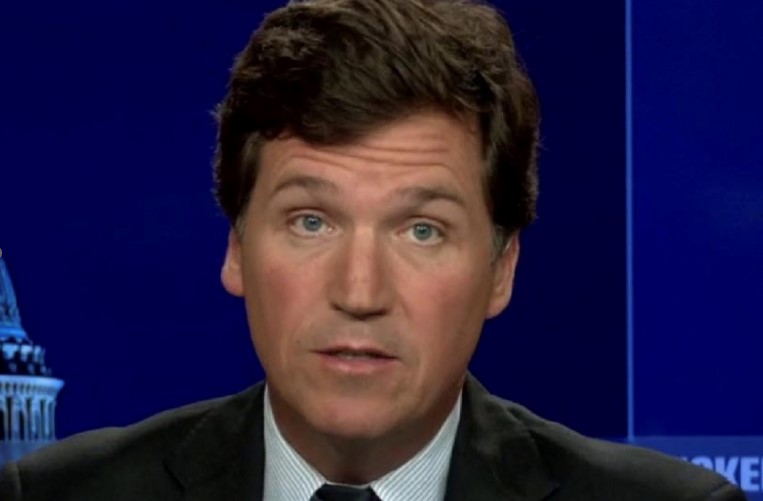
Tucker Carlson spent 35 years defending the Republican Party. He voted Republican in every election. He built the most-watched show on cable news making the conservative case night after night. And on June 18, sitting across from Travis Dhanraj and Karman Wong on the "Can't Be Censored" podcast, he said six words that landed like a grenade in the middle of the GOP coalition.
"I'm out. And if I'm out, then I think a lot of other people are out."
The full quote was even more pointed. "I would not support the Republican Party. There's no chance I would support the Republican Party," Carlson said. "How could I, or any American voter, support a political party that's not loyal to the United States, that puts the interest of a foreign country above those of its own citizens?"
His primary grievance is the Iran war and what he sees as the GOP's willingness to follow Israeli Prime Minister Benjamin Netanyahu's lead on Middle East policy. Carlson has called the conflict one the U.S. has "effectively lost already" and described the party's posture as "immoral." He previously apologized for endorsing Trump's 2024 campaign, saying he had "misled people" after U.S.-Israel strikes on Iran in February.
"There's no defending this because it's immoral," Carlson said on the podcast.
You can agree or disagree with Carlson's specific foreign policy conclusions. Plenty of conservatives do both. But the underlying frustration — that Republican voters keep showing up and Republican leaders keep serving someone else's priorities — didn't come from nowhere. That pressure has been building for years.
Glenn Beck, to his credit, didn't waste time pretending to be surprised. On his show this week, as reported by The Blaze, Beck aimed his warning squarely at Washington Republicans.
"I told you this would happen," Beck said. "For years, I have said this. I said the day would come when your own people would stop defending you, when their loyalty would run out, when 'the other side is worse' doesn't work anymore."
Then he turned to conservative voters with something equally blunt: "Every time you defend them for free, they teach you that betrayal is survivable, that they can ignore you and keep you. The only language a comfortable incumbent understands is the sound of the door closing behind a voter who's done."
That's a harder sentence to dismiss than the typical cable-news back-and-forth. Beck isn't endorsing Carlson's exit. He's explaining the mechanics of how a party loses people who once considered themselves lifers.
Rep. Marjorie Taylor Greene piled on from her account on X, writing that Carlson is "not the only one" and that "A LOT of us that are absolutely fed up." She clarified the shift doesn't mean becoming Democrats but being "DONE with the America LAST Republican Party."
President Trump pushed back on the premise. He dismissed the idea that Israel influenced his Iran strategy, stating back in March: "If anything, I might've forced Israel's hand." He insisted he "calls the shots." Whether that settles the debate for frustrated voters is another question entirely.
The counterargument to Carlson's move writes itself: walking away from the party doesn't change the party. It just removes your leverage. Every midterm and every primary is a chance to replace the incumbents who ignore you with ones who won't. Leaving the building means you're not in the room when the decisions get made.
But Beck's point stands too. A voter base that never credibly threatens to leave is a voter base that never has to be listened to. The GOP has spent decades banking on the assumption that conservatives have nowhere else to go. Carlson just demonstrated that "nowhere else to go" and "staying" aren't the same thing. A voter doesn't have to join the other team to stop showing up for yours.
The real question isn't whether Tucker Carlson is right about Israel or wrong about Israel. It's whether the Republican Party recognizes the difference between a voter who's angry and a voter who's gone.
One of them comes back after a good speech. The other one already changed the channel.