
At 7:15 PM Eastern on Friday night, the United States launched its third round of strikes on Iran this week. By early Saturday morning local time, Iran fired 12 ballistic missiles at Muwaffaq Salti Airbase in Jordan — a facility housing American F-35s — and declared the Strait of Hormuz closed "until further notice."
So that's where we are. Iran just attacked a US ally, tried to hit our most advanced fighter jets, and shut down the most important shipping lane on the planet. All in one night.
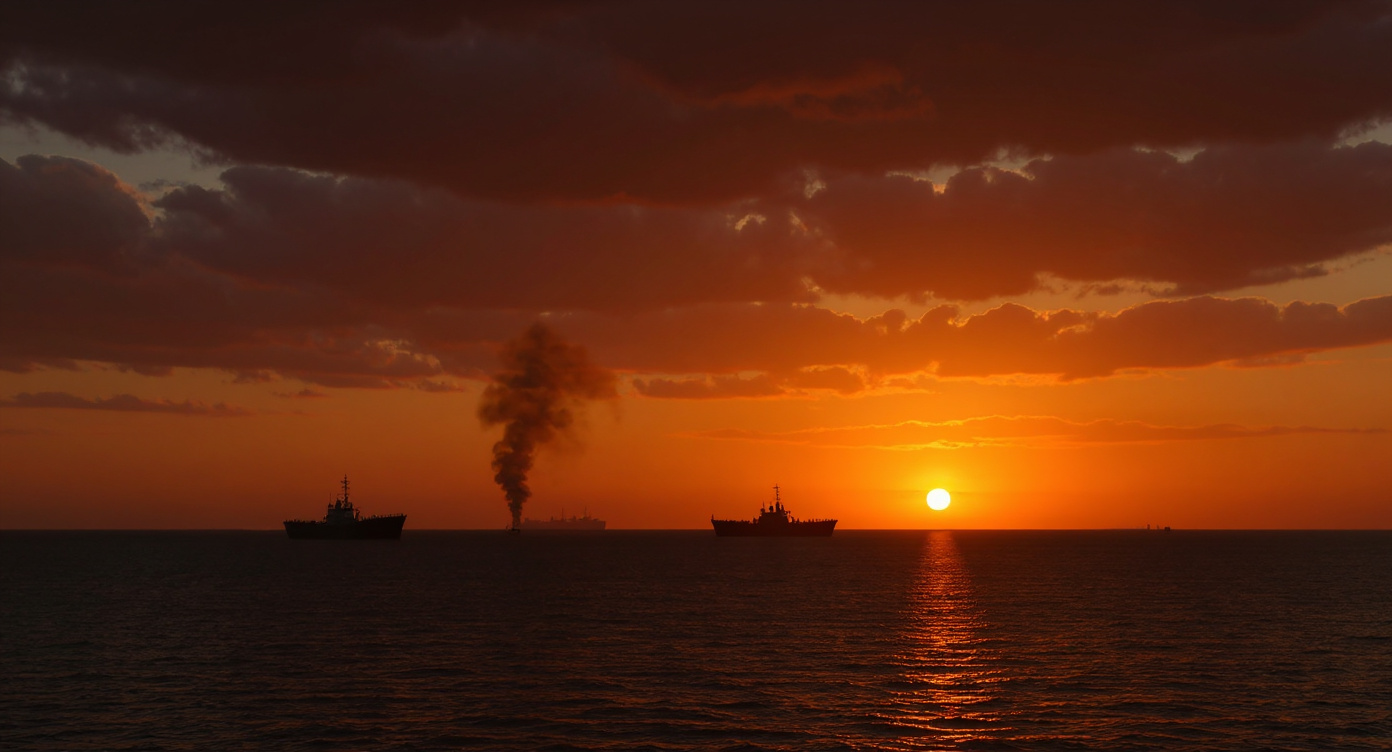
The trigger for the latest American strikes was Iran's Revolutionary Guard Corps attacking the M/V GFS Galaxy, a Cyprus-flagged container ship, in the Strait of Hormuz. One civilian crew member is still missing. The ship was severely damaged. Targeting civilian shipping in an international waterway is the kind of thing that used to start actual wars, and Iran did it like they were swatting a fly.
Of the 12 Iranian missiles aimed at the Jordanian airbase, 3 reportedly found their targets. Strikes also hit across southern Iran itself — Bushehr, Asalouyeh, Bandar Abbas, Bandar-e Dayyer, Sirik, and Jask, with 10 or more explosions reported. US bases in Kuwait and Bahrain were used in the operations. No American casualty figures have been released.
Trump's response has been the diplomatic equivalent of showing someone your gun collection. He posted that "1,000 missiles" are "locked and loaded" and aimed at Iran, and warned he would "completely decimate" the country if its leaders attempted his assassination. He signed off the post with "praise be to Allah!" which is either the most provocative troll in presidential communication history or exactly the message Tehran needed to hear in language they'd understand.
Mojtaba Khamenei, son of Supreme Leader Ali Khamenei and widely viewed as the regime's next-generation power center, came out swinging. "It is our certain and undeniable duty that this revenge be carried out," he said. "Vengeance is what our nation is demanding, and this must definitely be done." He added that Iran's enemies "will carry their dream of a peaceful death in bed to the grave."
That's not the language of a government looking for an off-ramp. That's a regime that has decided escalation is the only option that keeps the mullahs in power domestically.
Iran's ambassador warned that Tehran would abandon the existing Memorandum of Understanding if American attacks continue, and demanded the US implement previously agreed-upon conditions before any negotiations could resume. The MoU is already in tatters. Closing the Strait of Hormuz — through which roughly 20% of the world's oil passes on any given day — isn't a negotiating tactic. It's a declaration that diplomacy is over.
The administration's posture has shifted accordingly. Trump abruptly returned to the White House, cutting short what was supposed to be a weekend away. When a president cancels golf, it means the situation has moved past the briefing-room stage and into the operational one.
The contrast with the previous administration doesn't even require editorializing. Four years ago, Iran got pallets of cash and polite requests to please come back to the negotiating table. Today, Iran attacked a civilian ship, fired missiles at an American ally, closed a major waterway, and the American president responded by telling them exactly how many weapons are pointed at their infrastructure.
Iran fired 12 missiles at a base housing American jets. They shut down the Strait of Hormuz. They publicly promised vengeance. And the president of the United States told them he has a thousand reasons to reconsider.
Somewhere in Tehran, someone is doing math.