
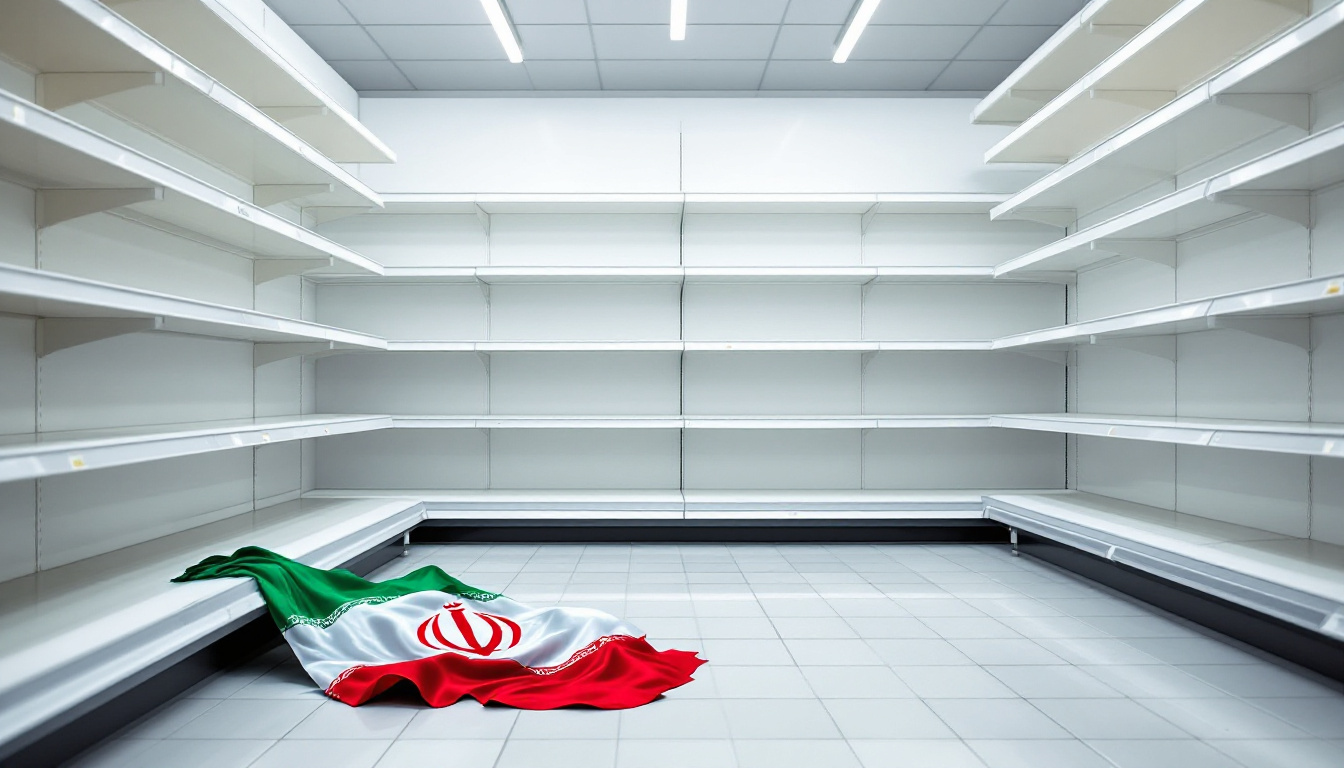
A 33-year-old crypto trader in western Iran who goes by "Nima" told reporters he's down to choosing between groceries and everything else. "I'm in survival mode," he said. Food prices across the country have spiked 400% as the U.S. economic blockade tightens around the regime's throat.
That's not a typo. Four hundred percent.
According to sources from inside Iran, the economy has deteriorated so rapidly that ordinary citizens are now publicly saying what the mullahs can't afford to admit. "This isn't life, to worry every day if you can feed your family," one blue-collar worker told foreign media. A 26-year-old Tehran resident named "Saeed" described a job market so gutted that most employers don't even offer insurance anymore. "You take one look at the condition of job postings," he said, and you understand what's left of the economy.
The numbers paint the picture in stark detail. Annual inflation has blown past 80%. Unemployment hit 9.1% in June — a four-year high. The Iranian rial has cratered to 1.88 million per U.S. dollar. The regime shut down the internet for three straight months starting in January to try to smother unrest and organized protests against them. That's not the behavior of a government with the situation under control.
Iranian President Masoud Pezeshkian, to his credit, accidentally told the truth. "We could sell oil, and now we can't," he said. The blockade cut off Iran's revenue lifeline, and everything downstream — food, jobs, currency — collapsed with it.
Naturally, regime officials are doing what people who are desperately clinging to power always do. Iranian Agriculture Minister Gholamreza Nouri-Ghezeljeh insisted that Iran's food security remains "intact" and claimed that "85 percent of Iran's food production is supplied domestically." Mehdi Pirsalehi, the chief of Iran's Food and Drug Organization, trotted out numbers about a 19% increase in poultry and egg production, an 18% bump in greenhouse output, and 3 million metric tons of imported food supposedly received. Everything is fine, comrades.
The London-based National Council of Resistance of Iran called these statements "unprecedented admissions of failure" — which is a polite way of saying the regime's own talking points are now indistinguishable from a damage report.
Meanwhile, President Trump doubled down on declaring the Strait of Hormuz U.S. territory and warned Oman against interfering with the pressure campaign. This is what maximum pressure looks like when it's actually applied — not Obama-era pallets of cash, not the Biden team's polite suggestion that maybe Iran should consider behaving. An actual squeeze with actual consequences.
For decades, the playbook on Iran was strongly worded letters, symbolic sanctions, and quiet side deals that let oil keep flowing through back channels. The diplomatic establishment insisted that engagement and incentives were the only responsible path. The rial at 1.88 million to the dollar suggests otherwise.
The regime claimed 62% more seedlings were produced this year. Their citizens are skipping meals. When a government's best argument is greenhouse statistics while families debate whether they can afford bread, the gap between the talking points and reality has become the story itself.