
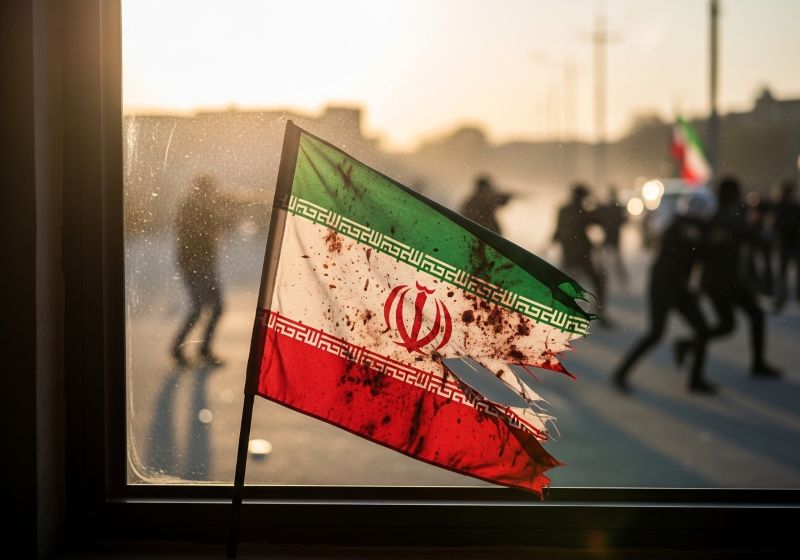
Fifteen million barrels. That's all the Iranian oil left in the delivery pipeline to China. Once those tankers dock, Tehran's last revenue stream goes dry.
Treasury Secretary Scott Bessent made the announcement, saying in part, "They will have nothing to trade for anything, probably within the next two weeks." "They are going to make their final deliveries of oil to China, and then they will have nothing."
The scorecard, in Bessent's telling, isn't close. "The score is the United States, one billion — more than one billion barrels have gotten out — Iran, zero," he said. More than a billion barrels of oil have transited through the Strait of Hormuz under American protection while Iran sits locked out of the global market. Current throughput through Hormuz is running between 15 and 22 million barrels per day — above the pre-conflict average of 20 million. The waterway is open. The oil is flowing. Just not Iran's.
"They are isolated from the world," Bessent said. "They're a pariah state."
Operation Economic Outcast — the Treasury Department's pressure campaign — expanded secondary sanctions on any entity or country transacting with Tehran. The categories now cover digital assets, gold, aviation, technology, and shipping. It didn't just target oil. It targeted everything Iran could use to keep the lights on. China, the last major buyer willing to deal with Tehran, has sharply reduced its purchases. When your biggest customer starts ghosting you, the negotiating leverage shifts.
Iran tried to make a move at the UN General Assembly this week, proposing a seven-day deal to reopen the Strait of Hormuz and end hostilities. President Trump said no.
"They overplayed their hand," Trump told reporters outside the White House on Saturday. "They want to make a deal to open the Hormuz Strait immediately because they're losing so badly. We're winning tremendously."
The seven-day offer itself tells the story. Iran's position has deteriorated to the point where they're pitching temporary arrangements at international forums and hoping someone bites. A country negotiating from strength doesn't float a one-week trial run for a strategic waterway. A country burning through its last 15 million barrels does.
Trump added that he expects more talks with Iran this week, even after rejecting the proposal. The rejection wasn't a door closing — it was a price correction. Iran came to the table offering pennies. Trump wants the whole dollar.
Remember the previous approach. The Obama administration shipped pallets of cash to Tehran — $1.7 billion, physically loaded onto planes — as part of the 2015 nuclear deal. Iran used the breathing room to fund Hezbollah, arm the Houthis, and expand its proxy network across the Middle East. Maximum engagement produced maximum instability.
Bessent's approach is the mirror image. Squeeze every revenue source. Sanction every partner. Wait. Iran's previous Memorandum of Understanding with the U.S. went unmet. The current terms haven't been softened.
One billion barrels out through Hormuz under American watch. Zero for Iran. Two weeks until their last delivery clears. The leverage isn't theoretical — it's a tanker schedule.