
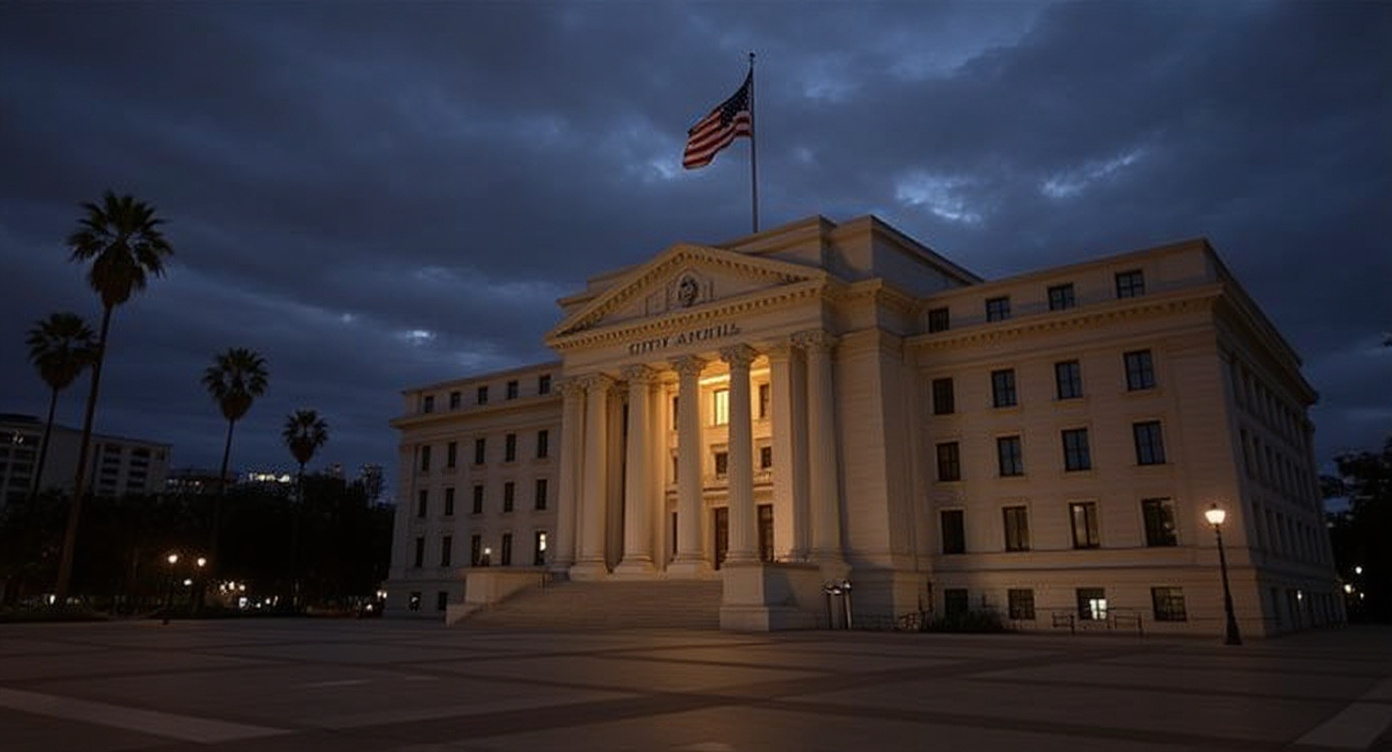
Karen Bass, the mayor of Los Angeles, currently holds a 28% approval rating with her own voters. Her disapproval sits at 63%. Those aren't typos.
And somehow, that's not the worst part of her week.
A new University of California, Berkeley poll of likely voters in the LA mayoral race has City Councilwoman Nithya Raman leading Bass 39% to 28%, with 33% still undecided. Bass finished first in the city's open primary earlier this year. Raman advanced to the runoff after knocking out Spencer Pratt, the more conservative candidate in the field. So the runoff Los Angeles gets is between a mayor who can't crack 30% approval and a card-carrying member of the Democratic Socialists of America.
That's the menu. Pick your poison.
Bass's collapse isn't mysterious. The wildfires that devastated parts of the city earlier this year exposed an administration that was unprepared, slow to respond, and unable to explain where the resources went. Residents watched neighborhoods burn while city leadership pointed fingers at everyone from the utility companies to the wind. The approval numbers aren't a polling anomaly. They're a receipt.
Raman, for her part, isn't winning because Los Angeles suddenly discovered a passion for democratic socialism. She's winning because she's not Karen Bass. The 33% undecided block tells you everything — a third of likely voters looked at both options and haven't committed, which is what happens when neither candidate represents where most of the city actually lives politically. But between a failed incumbent and an ideological outsider, the outsider is getting the benefit of the doubt.
The DSA affiliation would normally be a disqualifier in a citywide race, even in Los Angeles. But Bass has managed something remarkable: she's made a socialist look like the pragmatic alternative. When your approval is 35 points underwater, your opponent doesn't need to make a case. She just needs to exist.
Bass's camp will point to the undecided third as a path back. Incumbents, the theory goes, consolidate late. But that theory assumes the undecided voters are torn. A 63% disapproval rating suggests they're not torn — they're looking for permission to leave. The undecided number isn't a reservoir of potential Bass support. It's a group of people who haven't yet talked themselves into voting for a socialist.
This is the pattern in Democratic cities now. The moderate Democrat fails visibly — on crime, on homelessness, on basic emergency management — and the replacement isn't a centrist correction. It's a lurch further left. The party doesn't have a moderate bench because it spent a decade telling moderates they weren't progressive enough. So when the incumbent collapses, the only person standing in the wings is someone who thinks the real problem was that government wasn't big enough.
Los Angeles had a mayor with a 28% approval rating. The next mayor may be a member of the Democratic Socialists of America.
One number created the other.