
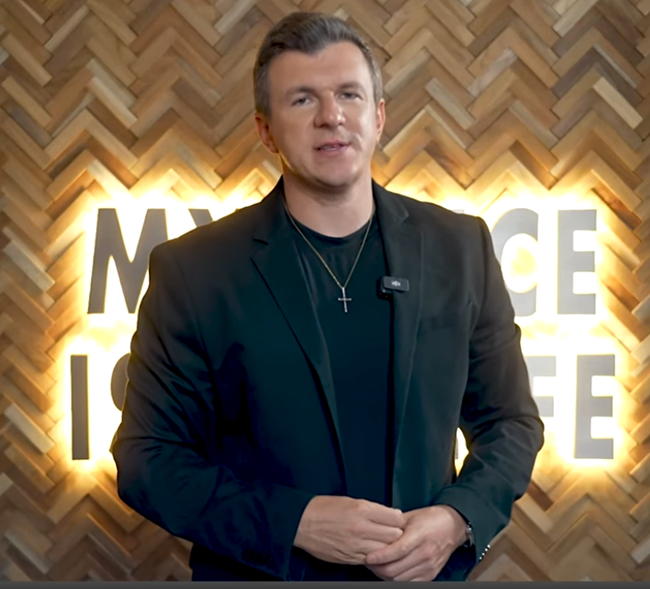
James O'Keefe walked into four Hennepin County polling places during Minnesota's August 11 primary, used names of real registered voters — some deceased, some who'd already voted — and got offered ballots at every stop. He never signed an oath. He never cast a vote. He filmed the whole thing.
On October 28, Hennepin County Attorney Mary Moriarty charged him with felonies.
Not for voting. For proving he could.
O'Keefe, 42, and his associate Cam Higby, 26, now face felony unlawful voting and identity theft charges. O'Keefe faces up to 10 years in prison if convicted. The pair visited four precincts across Minneapolis wearing disguises and using accents, testing whether Minnesota's voter-vouching system would let complete strangers walk in and receive ballots under other people's names. It did. Every time.
Minnesota's vouching law allows any registered voter to swear to the identity of up to eight unregistered people at the polls. No ID required. No documentation. Just one person's word that the stranger next to them lives where they claim. Under Secretary of State Steve Simon's tenure, not a single vouching fraud case has been prosecuted. The system operated on the honor principle, and nobody had bothered to check whether the honor was earned.
O'Keefe checked.
Moriarty's legal theory is that "stating a false identity to an election judge is already part of applying for a ballot" — meaning the crime began the moment O'Keefe gave a name, regardless of whether he ever touched a ballot or signed an affidavit. Higby's response was direct: "I never voted, I never signed an affidavit, and I never violated a law."
The distinction matters. The prosecution isn't alleging that O'Keefe or Higby cast fraudulent votes. They're alleging that demonstrating the possibility of fraudulent votes is itself a crime. The charges require a jury to believe that exposing a security vulnerability is worse than the vulnerability itself.
Vouching accounted for under 0.6% of all Minnesota votes in 2024. That's the number Moriarty's office will point to — a fraction so small it couldn't possibly matter. But 0.6% of a state where statewide races have been decided by a few hundred votes isn't a rounding error. It's a margin. And the question O'Keefe raised wasn't how many people vouched. It was how many of those vouches anyone actually verified.
The answer, based on Simon's tenure, appears to be zero.
Moriarty filed these charges on October 28 — exactly one week before the midterm elections. Initial court appearances are scheduled for November 16, safely after the votes are counted. The timing ensures maximum headlines during the final campaign stretch while pushing the actual legal proceedings past the point where they'd draw scrutiny to the vouching system before Election Day.
Minnesota had two options when O'Keefe's footage went public: fix the hole or prosecute the person who found it. They picked the one that doesn't require changing anything about how they run elections.
Court date's November 16. The vouching system will still be open on November 3.