
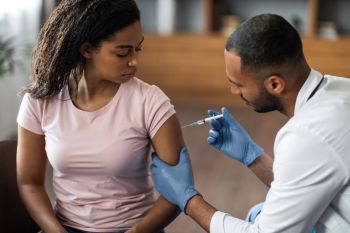
A vaccine built from scratch for a single patient's tumor — designed to teach the immune system to hunt down up to 34 unique cancer markers — just cleared Phase 3 trials with 1,137 melanoma patients. The treatment, a collaboration between Moderna and Merck, could hit FDA approval as early as 2027.
Turns out mRNA technology works a lot better when you point it at something that's actually trying to kill you.
The drug is called intismeran autogene, designated mRNA-4157, and it's paired with Merck's immunotherapy blockbuster Keytruda — generic name pembrolizumab — to treat patients with stage IIB through IV melanoma. The announcement came the week of August 19, 2026, and it represents the most advanced personalized cancer vaccine to reach this stage of development. Moderna CEO Stéphane Bancel framed it in terms even the skeptics should appreciate: "For many years, the idea of creating an mRNA treatment designed specifically for an individual patient's cancer was aspirational. We are now helping turn that vision into a reality."
Here's how it works. Doctors sequence a patient's tumor, identify the specific mutations driving it, and select up to 34 neoantigens — molecular fingerprints unique to that person's cancer. Moderna then builds a custom mRNA vaccine targeting those exact markers. The immune system gets a wanted poster for the cancer cells and nothing else.
The numbers back it up. A Phase 2b trial followed 157 patients over five years and found a 49% reduction in the risk of recurrence or death. Even more striking, patients saw a 59% reduced risk of the cancer spreading to distant organs or killing them. Five years of data. Not a press release with six weeks of follow-up.
Dr. Murad Alam, Chief of Dermatology at Northwestern Medicine in Chicago, pointed to the role artificial intelligence plays in making this feasible at scale. "These things are difficult, and historically took a lot of time, and it just wouldn't be feasible to do this for every individual patient without the power of AI," he said. Manufacturing each personalized vaccine still takes several months, but AI is compressing what used to be an impossible timeline into something that can actually reach patients.
Trials are already expanding beyond melanoma into non-small cell lung cancer, bladder cancer, and kidney cancer. Analysts project a commercial launch in 2027 if FDA approval proceeds on schedule.
Now. The obvious question. Yes, this is the same mRNA platform that became a four-letter word during COVID. And plenty of Americans have legitimate reasons for their skepticism about how that chapter played out — the mandates, the shifting efficacy claims, the suppression of debate. None of that history disappears because Moderna found a better use for the technology. But a personalized cancer treatment with five years of clinical data and a 59% reduction in metastatic death is a fundamentally different product than a mass-produced shot pushed on healthy 20-year-olds. Refusing to acknowledge the difference isn't skepticism. It's stubbornness.
What makes this worth watching isn't just the science. It's what the science represents. American pharmaceutical companies, competing in a deregulatory environment, building treatments so targeted they're manufactured for a single human being. That's not collectivized medicine. That's the opposite. Every dose is built for one patient, one tumor, one immune system. It's the most individualized medical product ever developed.
A vaccine that treats your cancer and nobody else's. If that's not American innovation, nothing is.