
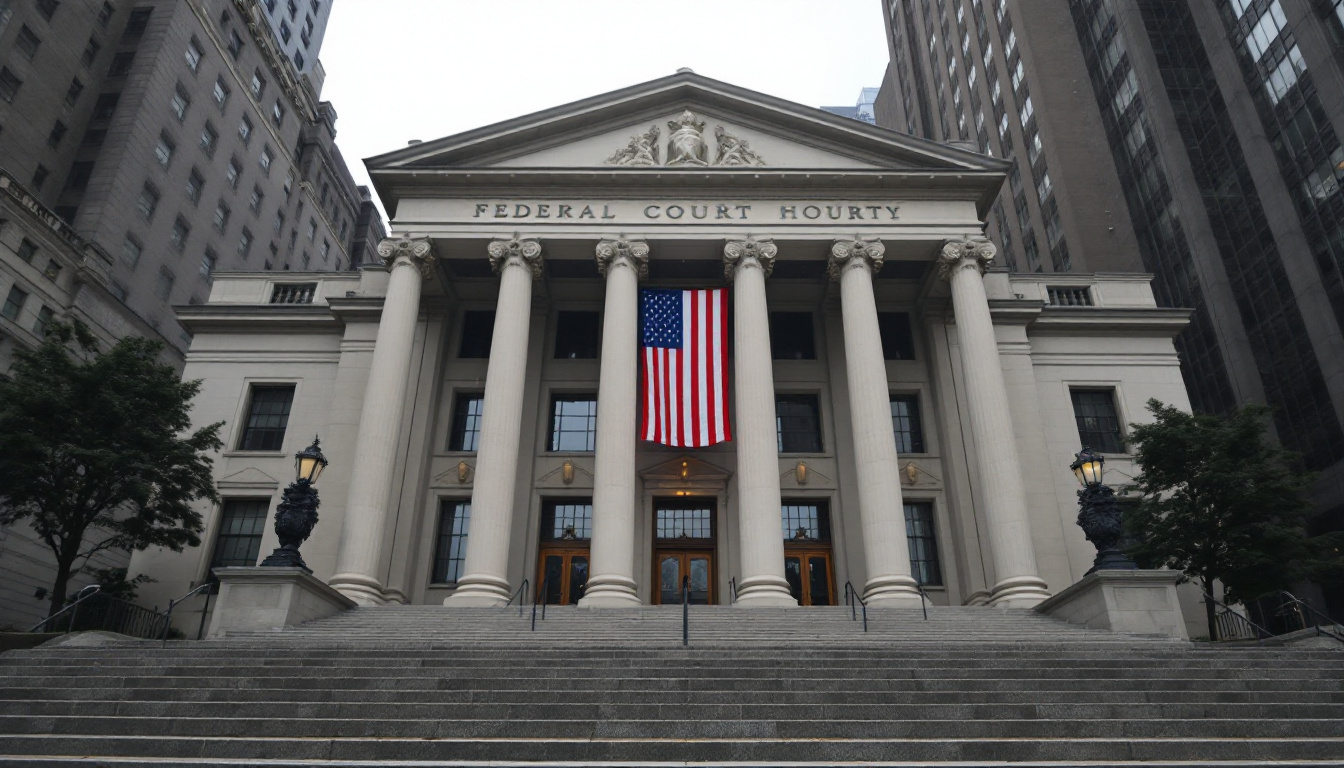
In May 2026, a federal grand jury in Fort Worth, Texas issued a subpoena to NYU Langone Hospitals requesting the identities and medical records of every patient who received treatment for gender dysphoria while under 18, covering January 2020 through May 2026. The Department of Justice wanted to know what was being done to children and who was doing it.
U.S. District Judge Katherine Polk Failla said no.
On June 24, Judge Failla, sitting in the Southern District of New York, granted a temporary restraining order blocking the DOJ from accessing those records. The case, Coe v. Blanche, was brought by the ACLU, the New York Civil Liberties Union, and Lambda Legal on behalf of three New York families with transgender children and two transgender young adults who were minors when they began treatment. All plaintiffs filed under pseudonyms.
Judge Failla ruled that the subpoenas violated the Fourth and Fifth Amendments, characterizing the DOJ's effort as "a concerted effort to obtain deeply private information about an entire class of individuals without their knowledge or consent." The ruling doesn't just cover NYU Langone — Mount Sinai Health System was also involved in the case.
The ACLU celebrated. Chase Strangio, Co-Director of the ACLU's LGBTQ & HIV Rights Project, said they were "thankful the court has granted our emergency request to protect the privacy interests of transgender New Yorkers and their families." Omar Gonzalez-Pagan, Senior Counsel at Lambda Legal, called it "a victory for the basic privacy of our clients." Bobby Hodgson, Deputy Legal Director at the New York Civil Liberties Union, added that "New York's laws recognize that transgender youth deserve fundamental privacy protections for their sensitive medical records."
Privacy. That's the word doing all the heavy lifting here. Not safety. Not oversight. Not accountability. Privacy.
Dr. Kurt Miceli, Chief Medical Officer at the watchdog organization Do No Harm, offered a different read. "It's troubling to see activist judges overlook children's safety in matters involving sex change interventions," Miceli said, reported by America's Voice News via The Center Square.
The framing from the plaintiffs' side treats a federal investigation into medical procedures performed on minors as if it were a fishing expedition into someone's diary. But a grand jury subpoena isn't curiosity — it's a legal instrument that exists because there's reason to look. The DOJ didn't subpoena records of knee surgeries or tonsillectomies. It subpoenaed records of irreversible procedures performed on children who can't legally sign a contract.
At least eight other federal district courts have already blocked similar DOJ administrative subpoenas related to this issue. That pattern suggests this isn't a single rogue judge — it's a coordinated judicial blockade against federal oversight of an entire category of pediatric medicine.
A preliminary injunction hearing is scheduled for July 8. If Judge Failla converts the temporary restraining order into a longer-term injunction, the DOJ's investigation stalls indefinitely. The hospitals keep operating. The records stay sealed. And the federal government — the entity we theoretically empower to enforce laws protecting children — gets told to look the other way.
Every other area of pediatric medicine invites federal scrutiny. The FDA regulates what drugs children can take. CPS investigates when children are harmed. State medical boards review procedures that go wrong. But suggest that the DOJ should be allowed to review records of puberty blockers and surgeries performed on minors, and suddenly it's a constitutional crisis.
The Fourth Amendment protects against unreasonable searches. Whether a grand jury subpoena into surgical procedures on children qualifies as "unreasonable" depends entirely on whether you think the children or the institutions need protecting.