
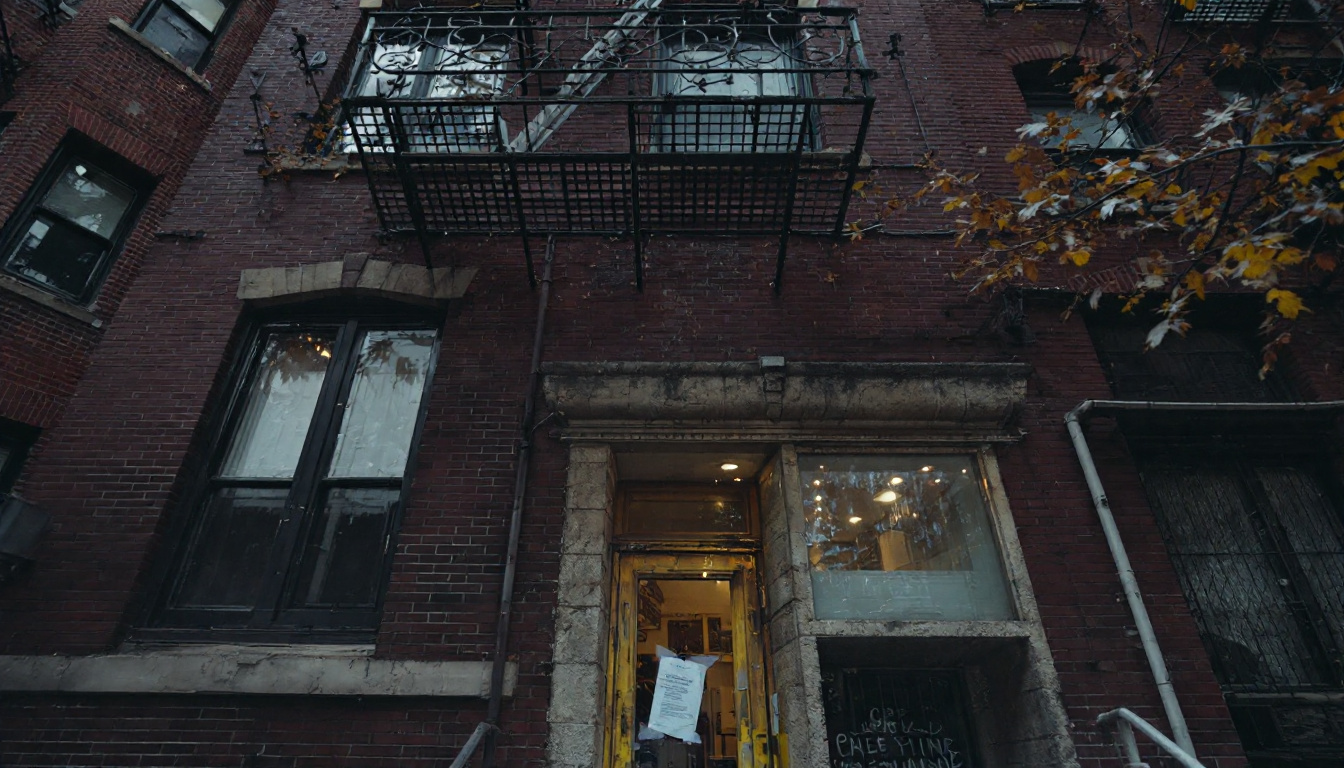
One of the new tenants at 126 W. 83rd St. on Manhattan's Upper West Side has been arrested three times since moving into the rent-stabilized building in 2024 — including twice for stabbings, according to residents who spoke to the New York Post.
The existing tenants didn't know he was coming. They didn't know any of them were coming.
The Post's exclusive investigation reveals that the building's landlord struck a deal under New York City's Article XI program to move homeless individuals and ex-convicts into the quiet, working-class complex without notifying the people who already lived there. The Article XI regulatory agreement, approved by the New York City Council in 2024, subsidizes the landlord with payments of up to $6,000 a month per placement. The standard Article XI contract requires 10% of units be set aside for formerly homeless households.
Sisters of Charity Housing Development Corporation CEO Matthew Janeczko told residents at a meeting that placements would be "strictly capped at eight units." Reassuring words from a man whose organization signed a 40-year agreement that says something very different.
The Post reviewed that contract. It explicitly permits the owner to set aside up to 30% of the building — up to 23 apartments — for what the agreement calls "alternative placements." Eight units is what they told the tenants. Twenty-three is what they put in writing.
"We don't want to be a shelter," one resident told the Post. "We don't want to be program housing."
These are elderly residents. Teachers. City employees. People who chose a rent-stabilized building on the Upper West Side because it was safe and stable. Many of them are still processing the 2023 murder of their neighbor, 74-year-old Maria Hernandez, who was brutally killed by the building's own superintendent — an ex-convict who was hired without a background check.
The city uses two models for moving homeless and high-risk individuals into permanent housing: congregate housing, where an entire building is dedicated to supportive services with on-site staff, and scattered-site housing, where individuals are leased into conventional private buildings. The scattered-site model still requires social workers, case managers, or weekly mobile crisis teams to visit on a scheduled basis. Every tenant the Post interviewed said they have never seen support staff in or outside the building. Not once.
So the building gets the placements but not the services. The landlord gets $6,000 a month per unit from the city. The tenants get a neighbor with two stabbing arrests and a promise that turned out to be off by 15 apartments.
The incentive structure is worth understanding. The agreement gives the landlord a financial reason to cycle out current tenants — many of them long-term, rent-stabilized — and replace them with city-subsidized placements at $6,000 a pop. The people being displaced aren't Wall Street brokers. They're the public servants Democrats claim to fight for.
Residents say they are "living in fear." That phrase gets thrown around loosely in New York housing fights. It means something different when the last tenant who didn't see it coming was a 74-year-old woman murdered in her own apartment by a man the building hired without checking his record.
The contract runs for 40 years. The tenants found out after it was signed.