
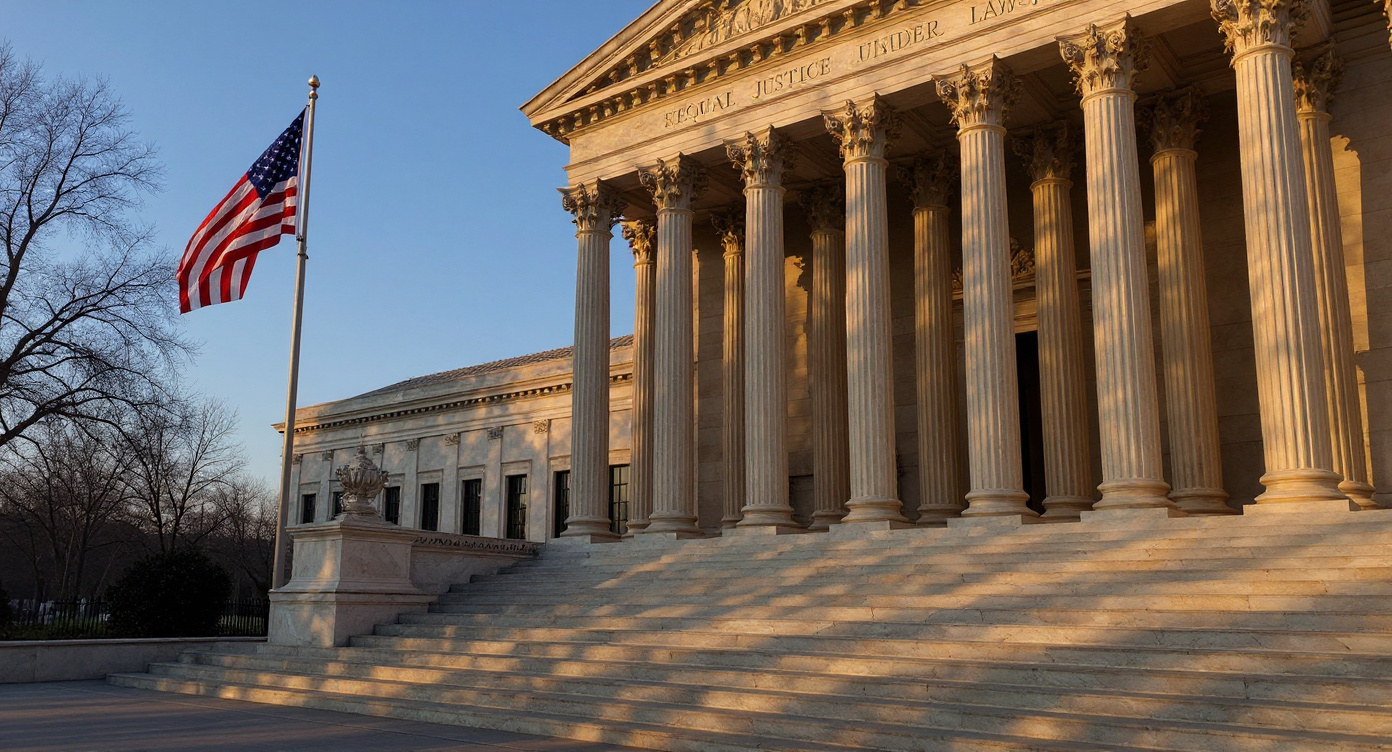
For ninety-one years, federal agency heads enjoyed a legal forcefield that let them ignore the president who appointed them, defy the voters who elected him, and answer to exactly nobody. On Sunday, that forcefield died in a 6-3 Supreme Court ruling.
The case was Trump v. Slaughter. The precedent was Humphrey's Executor, decided in 1935. And the result is the most significant restructuring of executive power since FDR tried to pack the court in the first place.
Chief Justice John Roberts, writing for the majority, didn't leave much room for interpretation. "Although it is up to the Senate to decide whether to confirm those with whom the President would prefer to work," Roberts wrote, "neither Congress nor the courts may saddle him with those with whom he cannot work." The Federal Trade Commission, he noted, performs tasks that are "the very essence of 'execution' of the law" — meaning its commissioners serve at the pleasure of the president, period.
The case centered on Rebecca Kelly Slaughter, an FTC commissioner appointed in 2018 and fired by President Trump in March 2025. Slaughter was given no cause for her removal — only told that her "continued service on the FTC is inconsistent with Administration priorities." A lower court initially ruled the firing unlawful, citing the old Humphrey's Executor framework that said FTC commissioners could only be removed for "inefficiency, neglect of duty or malfeasance in office."
The Supreme Court disagreed. Forcefully.
The FTC is a five-member commission, created in 1914, that enforces or administers roughly 80 federal statutes. Under the old precedent, no more than three commissioners could belong to the same party, and the president couldn't remove them without cause. That arrangement gave unelected bureaucrats a kind of tenure that no voter ever approved.
Slaughter defended the old system in terms that sounded reasonable on the surface. "Independence allows the decision-making that is done by these boards and commissions to be on the merits, about the facts, and about protecting the interests of the American people," she said. The translation: trust us, not the guy you elected.
James M. Burnham, an attorney who served in both Trump administrations, put it more plainly. "I don't think there is such a thing as an independent agency," Burnham said, "because everything has to be in one of the three branches." The Constitution doesn't have a fourth branch labeled "people who went to the right grad schools."
Justice Sonia Sotomayor, writing in dissent, warned that "the Court gives the President a power unknown even to the English Crown" and accused the majority of "elevating him above his once-coequal branches." It's a dramatic line. It's also a strange one, given that the actual English Crown could dissolve Parliament. The president just wants to fire a commissioner.
The ruling doesn't touch everything. In a separate 5-4 decision in Trump v. Cook, the Court declined to let President Trump remove Federal Reserve Governor Lisa Cook, carving out the Fed as constitutionally distinct. So the central bank keeps its independence — for now.
But the blast radius is still enormous. The FTC, the Consumer Financial Protection Bureau, the Equal Employment Opportunity Commission, the Consumer Product Safety Commission, the Merit Systems Protection Board — all of them just lost the legal shield that let their leaders operate as a permanent government within the government.
As reported by Patriot News Alerts, this ruling confirms a principle that should have been obvious from the start: the president runs the executive branch. Not advisory committees. Not holdover appointees. Not career bureaucrats who outlast the administrations that hired them.
The 1935 precedent was born in the New Deal, when the theory was that government needed "expert" agencies insulated from politics. Ninety-one years later, those agencies became the politics — regulating, enforcing, and shaping American life without a single vote cast in their favor.
Now the people who run them serve at the pleasure of the person we actually chose. That's not a power grab. That's the job description.