
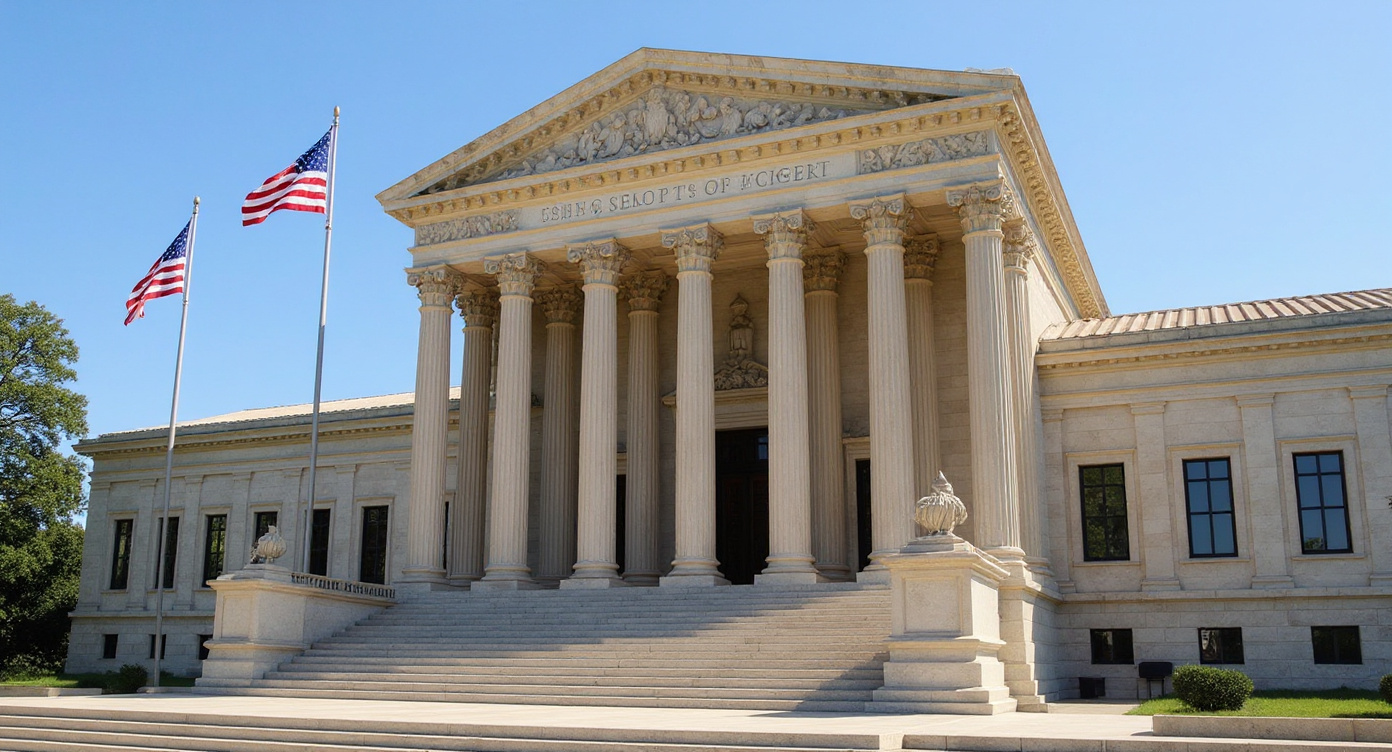
A Boston-based federal judge blocked Trump's executive order on mail-in ballots back in June. Twenty-three mostly Democrat-governed states and Washington, D.C. were protected under her injunction. On Monday, the Supreme Court swept it off the table.
The November midterms just got a lot more interesting.
The ruling, handed down August 24 by the Court's 6-3 conservative majority, lifted U.S. District Judge Indira Talwani's injunction that had frozen implementation of President Trump's March 2026 executive order restricting mail-in ballots. Talwani had argued the president "lacked authority to order changes in how states administer federal elections" and that "federal agencies lacked the ability to compile accurate citizenship lists." The Supreme Court didn't rule on the constitutionality of the order itself — it simply removed the legal barricade preventing it from moving forward.
A separate nationwide injunction issued on August 11 had targeted the U.S. Postal Service's enforcement role. That, too, is now effectively neutralized. The Department of Homeland Security and Justice Department can proceed with implementation while the underlying legal disputes continue to work through the courts.
Trump had vowed to end the use of mail-in ballots nationwide before the midterms, and the SAVE America Act — the broader voting restrictions package — has been the legislative backbone of that effort. The Court's decision doesn't guarantee the executive order survives final review. But it guarantees the order is operational when voters go to the polls in November.
The three liberal justices dissented — which tells you everything about who wanted this blocked and why. The same crowd that spent 2020 arguing mass mail-in voting was the sacred cornerstone of democracy is now watching the Supreme Court say a president can actually set conditions on it. Their argument was never about access. It was about volume.
Left-wing legal groups are already warming up their "voter suppression" talking points. Which is a curious way to describe requiring people to prove they're citizens before casting a ballot in a federal election. Judge Talwani's reasoning — that agencies couldn't compile accurate citizenship lists — was less a constitutional argument and more a complaint about government competence. The solution to bad data isn't unlimited mail-in voting. It's better data.
Twenty-three states fought to keep the injunction alive. Every one of them Democrat-governed. Not a single red state joined the challenge. That's not a legal coalition — that's a political strategy wearing a robe.
The executive order is live. The midterms are less than three months out. And the states that built their turnout models around ballot harvesting and drop boxes just lost their insurance policy.
The Court didn't say the order was constitutional. It said the challenge hadn't earned the right to stop it. Sometimes the most powerful legal ruling is the one that simply gets out of the way.