
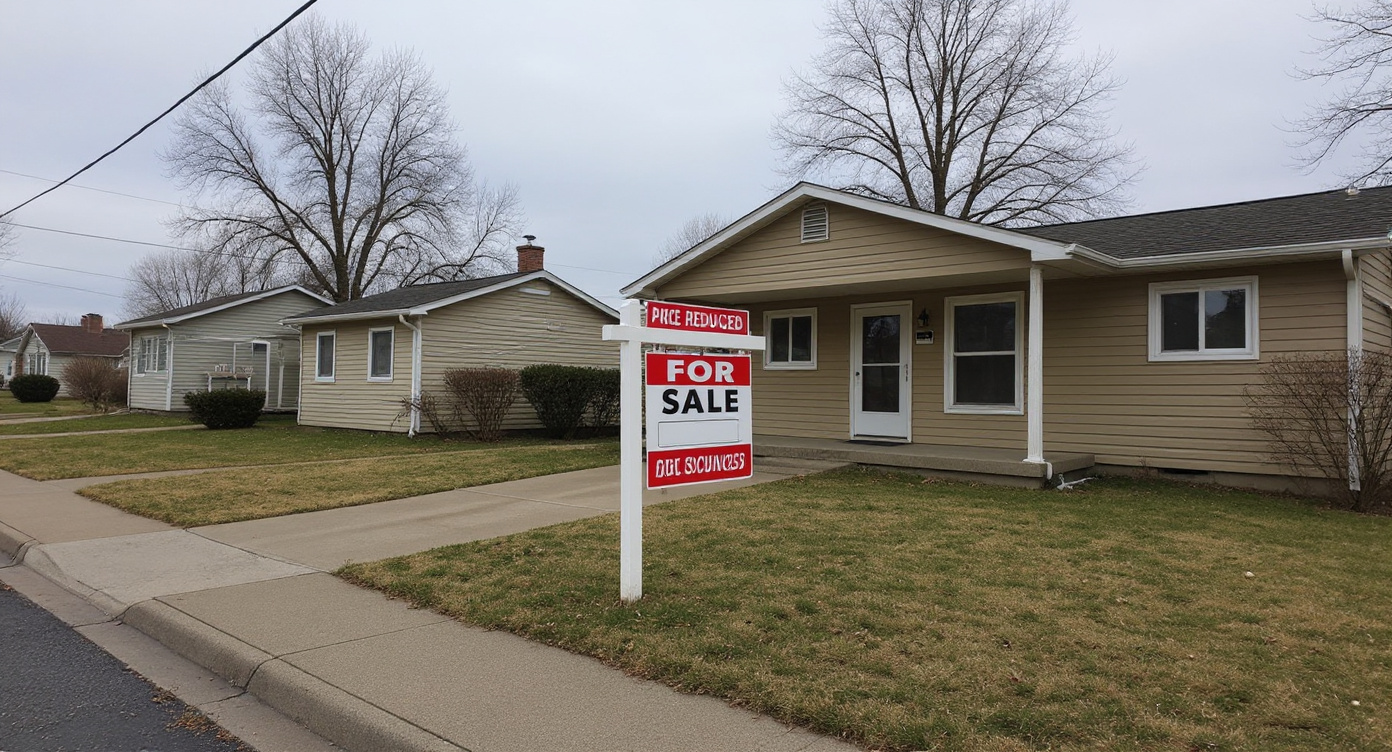
A Federal Reserve Bank of Dallas working paper found that the wave of 7 million unauthorized immigrants who entered the country between 2021 and 2024 drove up home prices by 30% and rents by 20% in the average American metro area. Not Fox News. Not a Heritage Foundation study. The Federal Reserve.
Every 25-year-old staring at Zillow listings they can't afford now has a peer-reviewed culprit.
The researchers compiled individual immigration court records and government administrative data to build what Just The News described as the first-ever calculation of how Biden-era illegal immigration affected local labor and housing markets. Their conclusion: for every 1% increase in unauthorized workers in a given area, home prices rose approximately 2.2% and rents climbed about 1.4%.
The math is straightforward. Add 7 million people to a country without adding 7 million housing units, and prices go up. The paper found that illegal immigrant inflows boosted employment "approximately one-for-one" — meaning every unauthorized worker who arrived found a job — but the construction industry didn't build enough new homes to absorb the added demand. More people, same houses, higher prices.
The study estimated that 30% of total employment growth between March 2021 and March 2024 was attributable to illegal immigrant workers. That's not a rounding error. That's nearly a third of the entire labor market expansion driven by people who entered the country illegally.
The authors called the 2021-2024 period an "unprecedented boom" in illegal immigration, which is the kind of clinical language economists use when the numbers are so extreme that any adjective sounds like an understatement.
The Biden administration spent four years insisting the border was secure, that the surge was "seasonal," and that immigration was an economic net positive. The seasonal surge apparently lasted 36 months and made housing unaffordable for a generation. The economic net positive landed squarely on the backs of renters and first-time buyers who watched their purchasing power evaporate.
The authors did include a caveat — the paper is a "preliminary draft circulated for professional comment" and doesn't necessarily reflect the official views of the Federal Reserve Bank of Dallas or the Federal Reserve System. Fair enough. But the data came from immigration court records and government administrative sources. This isn't a model built on assumptions. It's built on what actually happened.
Wages, incidentally, didn't move much. The paper found little measurable effect on wages from the immigration surge. So American workers got the worst possible combination: housing costs up 30%, rent up 20%, and paychecks flat. The immigrants got jobs. Landlords got higher rents. Homeowners on paper got richer. Everyone trying to buy their first home got the bill.
For years, pointing out that mass illegal immigration might affect housing prices got you labeled xenophobic. The approved response was that immigrants contribute to the economy and do jobs Americans won't do. Nobody mentioned they also need apartments Americans were already competing for.
The Federal Reserve Bank of Dallas put numbers on what the grocery store cashier and the substitute teacher already knew — they got priced out, and nobody in Washington could explain why without admitting who they let in.