
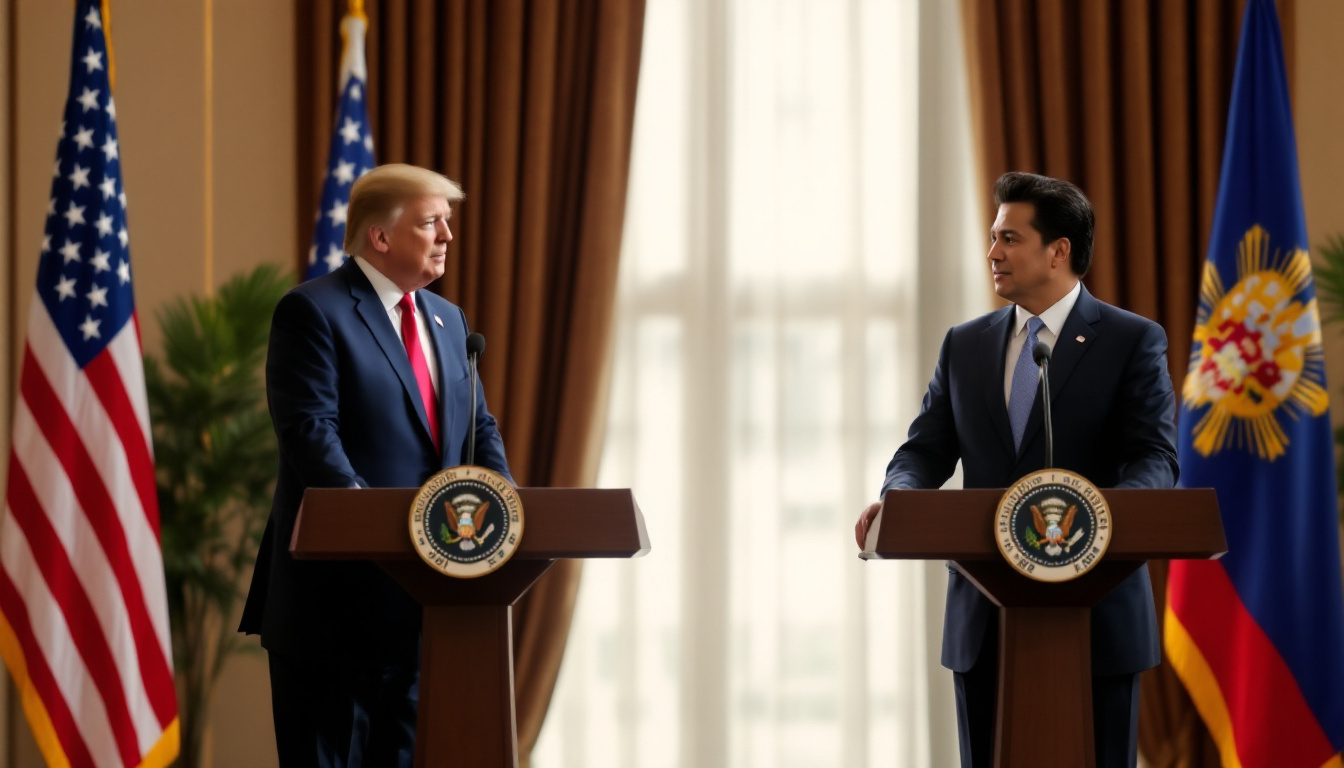
President Trump stood inside Malacañang Palace on Tuesday, fresh off a state luncheon with Philippine President Ferdinand Marcos Jr., and dropped this on the press pool: "We've just consummated a very big trade deal, the biggest trade deal we've ever made so far, and it is a fair deal for both countries."
That was day two of his Asia trip. Day one already had a signed trade statement with Thailand.
The Philippines deal covers agriculture and energy — two sectors where American producers have been getting squeezed by tariff asymmetry for years. Philippine exports currently face a 12.5% U.S. tariff imposed after Washington determined Manila hadn't adopted an effective ban on imports made with forced labor. Trump used that leverage, and by Tuesday afternoon, he was posting on Truth Social that the agreement would be "great for U.S. farmers and those in the energy business." The NY Post reported Trump told reporters the deal "took place very quickly" and called it "a magnificent deal for both."
But the Philippines stop wasn't just about trade. Trump announced Washington had approved more than $5 billion in arms sales to the Philippines, expanding defense cooperation with a critical Pacific ally that sits directly in China's backyard. He also floated something bigger — American nuclear technology for the Philippines' first modern nuclear project. "We're very much into nuclear now that it's safe, powerful, and safe, and inexpensive," Trump said during the bilateral meeting at Malacañang. An Alaska natural gas export partnership was also on the table.
The day before, in Manila on the sidelines of the ASEAN summit, Trump and Thai Prime Minister Anutin Charnvirakul signed a joint statement on the Agreement on Reciprocal Trade. Thailand agreed to eliminate all tariffs on U.S. exports, remove nontariff barriers on automobiles, medical devices, pharmaceuticals, ethanol, and poultry, and purchase an additional $2.6 billion in American agricultural products. That's not a vague framework. That's a price tag with line items.
The usual crowd will note that the Philippines deal hasn't been formally signed yet. Philippine Ambassador Babes Romualdez confirmed as much. What they won't mention is that the Thailand statement wasn't supposed to happen either — it materialized because Trump's team moved faster than the official schedule. Both agreements emerged from a trip that was originally billed as a layover on the way to the main event: three-way nuclear talks with Chinese President Xi Jinping and Russian President Vladimir Putin at the APEC summit in Shenzhen.
That's the part worth sitting with. Manila was supposed to be the warm-up. Instead, Trump walked out with a trade agreement, a $5 billion defense package, a nuclear energy partnership in development, and a second bilateral trade framework with Thailand — all before he even got to China.
The pattern is the same one we watched during the first term, except faster. Show up, apply leverage, close the deal, move to the next one. The bureaucratic class spent four years under Biden explaining why trade deals take decades of multilateral consensus-building. Trump's team needs about 36 hours and a state lunch.
Shenzhen is next. Xi Jinping greeted Trump on arrival. The nuclear talks with Xi and Putin — the first trilateral summit of its kind — are the stated reason for the entire trip. Everything that happened in Manila was supposed to be a sidebar.
Two trade deals. $5 billion in defense commitments. A nuclear energy partnership. And the main meeting hasn't started yet.