
The United States had a joint bombing campaign targeting Iranian energy infrastructure ready to launch this weekend. U.S. embassies across the Middle East had already warned Americans to "consider departing" due to the risk of "unforeseen escalation." Planes were fueled. Targets were locked.
Then Iran picked up the phone.
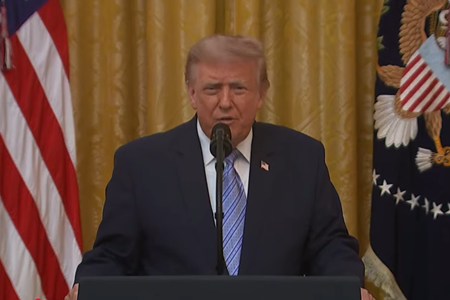
President Trump announced Saturday night on Truth Social that he was canceling the planned military strike after Iran and other Middle Eastern countries asked him to hold off, citing that "the perimeters of a deal has been agreed to." The framework includes two conditions that every previous administration treated as fantasy: the "Immediate, Complete, and Total OPENING OF THE HORMUZ STRAIT" and an end to Iran's nuclear threat.
Trump's full post left zero ambiguity about what was on the table if the deal falls apart. "The U.S.A. is locked and loaded and ready to go against the Islamic Republic of Iran, at levels of Military Terror, Strength, and Power not seen since World War II," he wrote. He added that he agreed to cancel the attack "for the future benefit of the WORLD and, likewise, the survival of a successful and prosperous Iran" — but only "subject to being able to rapidly make a DEAL."
That last part matters. This wasn't a stand-down. It was a pause with a lit fuse.
Saudi Crown Prince Mohammed bin Salman called Trump on Saturday and urged de-escalation, stressing the need to "prioritize dialogue to reduce escalation." That call had a significant impact on Trump's decision to hold fire — at least for now. Iran's Foreign Minister Abbas Araghchi had warned against "adventurous action" and threatened a "proportionate response" to any strikes, which is diplomatic language for "please don't."
Trump also confirmed that Israel "joins me in this commitment" — meaning the joint U.S.-Israeli strike package wasn't just an American bluff. Both countries had skin in the game and both stood down together, on Trump's terms.
The media spent years painting Trump as a reckless warmonger who'd stumble us into World War III. The same outlets that ran breathless coverage of the military buildup are now awkwardly reporting that the guy they called trigger-happy just achieved through credible threat what decades of diplomacy, sanctions, and the Iran Nuclear Deal couldn't. The Strait of Hormuz — through which roughly 20% of the world's oil passes — has been a chokepoint Iran has weaponized for leverage since the 1980s. Getting it opened without firing a shot isn't just a diplomatic win. It's an energy and economic win for every country that imports oil.
The Iran Nuclear Deal under Obama sent pallets of cash to Tehran and got a temporary slowdown that Iran violated anyway. The Biden administration spent four years trying to re-enter that same failed framework. Trump's approach was different: make the military option so real and so imminent that the other side calculates survival requires cooperation.
None of this is final. Trump made that clear. The strike is paused, not canceled. The military option hasn't been removed from the table — it's been set on the table with the safety off, right next to the negotiating documents. If Iran stalls, slow-walks, or backtracks, the bombers go back in the air.