
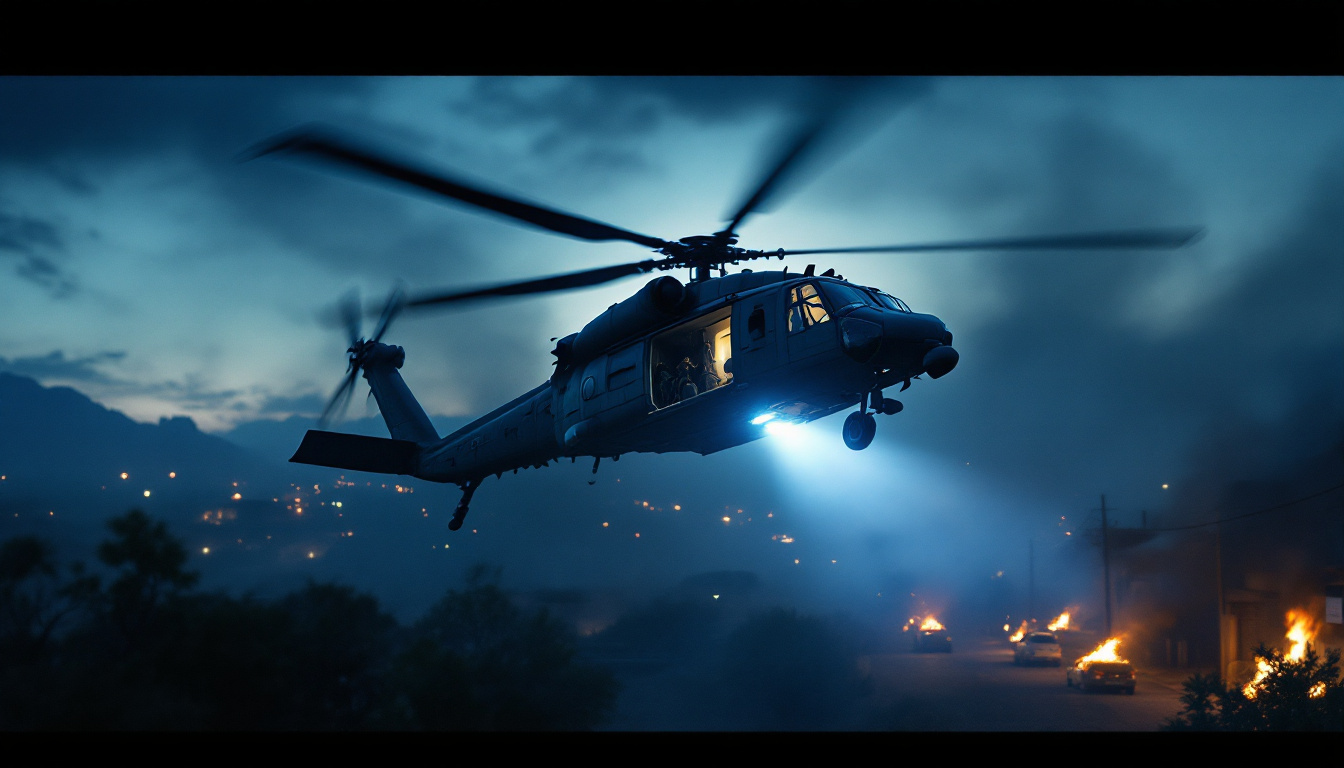
Fausto Isidro Meza Flores — known as "El Chapo Isidro," head of the Beltrán Leyva-affiliated Meza-Flores drug trafficking organization, and a fixture on the FBI's Ten Most Wanted list — was pulled out of a building in Guasave, Sinaloa at approximately 4 a.m. after Mexico's special forces surrounded his location using helicopters and drones. Seven of his alleged gunmen were dead. Four Mexican soldiers were dead. Eight people were in custody, including his alleged second-in-command and financial operator.
The intelligence that made it happen came from the Trump administration.
The Mexican Defense Ministry confirmed the overnight raid, which turned the streets of Guasave into a war zone. Cartel loyalists set up at least 10 roadblocks using burning vehicles in an attempt to cut off the military's extraction route. It didn't work. By dawn, Meza Flores was on a flight to Mexico City for prosecution, and the organization he built was missing its top three operators in a single night.
The DEA didn't mince — actually, let's just let them say it. "The capture of Fausto Isidro Meza Flores, 'El Chapo Isidro,' leader of the Beltrán Leyva-affiliated Meza-Flores drug trafficking organization, represents a significant victory against one of Mexico's most violent criminal networks." That's the Drug Enforcement Administration calling this exactly what it is.
Meza Flores had spent years on the FBI's Ten Most Wanted list. Years. Not months. The kind of target that previous administrations mentioned in press conferences and then quietly deprioritized when the political winds shifted. The Meza-Flores organization ran narcotics trafficking operations across Sinaloa with the kind of violence that makes headlines in Mexico and barely registers in American newsrooms.
What changed wasn't Mexico's willingness to act. Mexican special forces have always had operators capable of this. What changed was the intelligence pipeline. Trump's team provided the targeting package that let Mexico's military establish a perimeter around Meza Flores's location before he knew anyone was coming. Stealth and surprise — the two things cartel kingpins spend fortunes trying to prevent — showed up at his door anyway.
The usual crowd will find a way to frame this as American overreach or militarized diplomacy or some other graduate-seminar complaint. Meanwhile, the people living in Sinaloa who've watched the Meza-Flores organization operate with impunity for years woke up to a different reality. The head of the snake, his money man, and his second-in-command — gone before sunrise.
This is what upstream border security actually looks like. Not a debate about wall funding. Not a cable news argument about asylum processing. An FBI Top Ten Most Wanted cartel kingpin getting dragged out of his compound in the dark because American intelligence made the operation possible. The drugs that would have crossed the border next month from Meza Flores's network now have no one to coordinate the shipment.
Seven dead gunmen. Four dead soldiers. Ten burning roadblocks. One kingpin on a plane to Mexico City.
That flight left at dawn.