
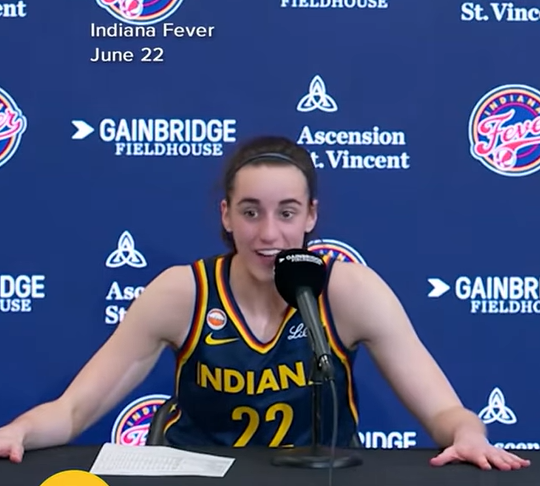
On July 24, USA Today published a social media post telling its audience that Caitlin Clark "skipped the WNBA Orange Carpet on Thursday, opting to get her hair done in her hometown of Des Moines." The framing was deliberate — the most popular player in women's basketball couldn't be bothered to show up for the league's big night because she had a salon appointment.
Clark was actually at an event for the Caitlin Clark Foundation.
USA Today's sports desk didn't just get a detail wrong, they invented a narrative — Clark as the prima donna who blew off a league event — and ran with it before checking what she was actually doing that night. When the blowback hit, USA Today quietly tacked on a "clarification" that read: "Caitlin Clark was attending an event for the Caitlin Clark Foundation, which is why she missed the WNBA All-Star Weekend Orange Carpet."
A "clarification." Not a correction. Not an apology. A clarification — as if the original post was merely ambiguous rather than completely fabricated.
The response was immediate and brutal. Linda Cohn, the newly retired ESPN SportsCenter anchor, fired back: "How in the world is USA TODAY still existing with SEXIST headlines like this only aimed at Caitlin Clark?! They just keep doubling down on their ignorance and stupidity."
One social media commenter, Jarvis Best, summed up what most people were thinking: "Did Caitlin Clark sleep with USA Today's boyfriend or what's going on here?"
The obsession is worth examining. Clark drew 19,783 fans to the All-Star Game at the United Center. She is, by every measurable standard, the biggest draw women's basketball has ever produced. She fills arenas. She moves ratings. She sells jerseys. And for that, a certain kind of sports writer can't stand her.
USA Today sports columnist Nancy Armour and sports editor Heather Burns oversee a desk that has made targeting Clark something of a specialty. The pattern isn't subtle. Clark succeeds, the coverage frames her as difficult. Clark breaks a record, the coverage asks whether she deserves the attention. Clark skips a red carpet to run a charity event, the coverage says she went to get her hair done.
This is what happens when activist journalism meets a subject who won't cooperate with the narrative. Clark doesn't complain about inequality. She doesn't make political statements. She just plays basketball at a level that fills stadiums — and that drives a particular breed of sportswriter absolutely crazy, because her success suggests the product might matter more than the message.
When your correction is more newsworthy than your original story, you're not in the journalism business anymore. You're in the narrative business. And business isn't great.