
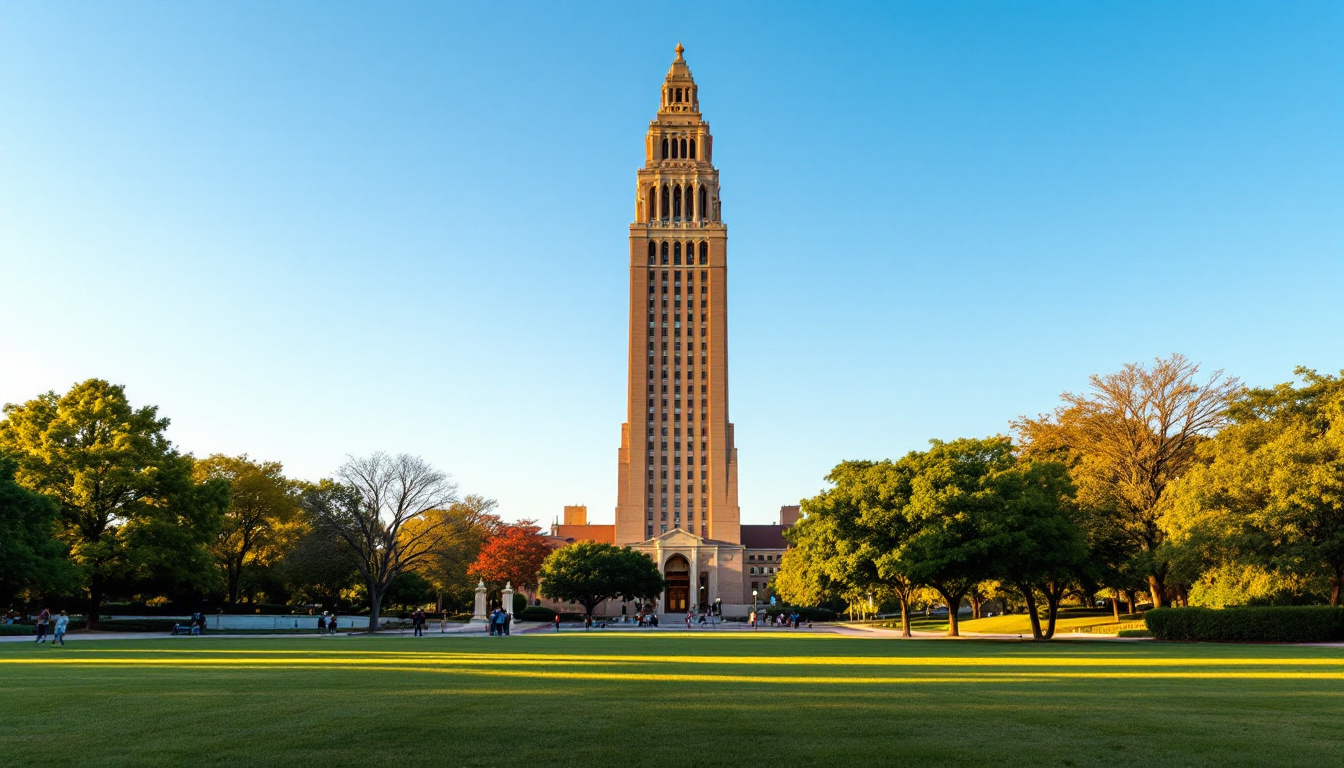
African and African diaspora studies. Mexican American and Latino studies. Women's and gender studies. A fourth major — race, indigeneity, and migration — was so new it hadn't even launched yet. All four woke majors are gone at the University of Texas at Austin, the flagship public university in the second-largest state in the country.
And that's just the beginning.
UT-Austin is overhauling its entire core curriculum under a 22-member faculty task force created in late 2025, slashing the current 42-credit core requirement down to 36 credits built around three pillars: Arts and Humanities, Social Sciences, and STEM. Starting Spring 2027, 113 "topic courses" will lose their core eligibility entirely — meaning students can still take them, but they won't count toward graduation requirements. The financial incentive to sit through a semester of grievance theory just evaporated.
University President Jim Davis framed the overhaul in a message this August: "The goal is not to determine what students think, but to ensure that they are capable of thinking well by exploring important ideas together." That's a diplomatic way of saying what everyone already knows — the old curriculum wasn't producing thinkers. It was producing activists with loan balances.
The move comes under Texas law SB 37, which directs public universities to restructure their general education requirements. UT-Austin isn't operating in a vacuum. Texas A&M already removed more than 200 courses from its core. The University of Houston axed 133 in August. The Texas legislature set the framework. The universities are executing.
Regent Chair Kevin Eltife was blunt about where this is heading: "You're not killing those classes yet, but the supply and demand is going to determine the catalog at some point." Translation: when a course no longer counts toward anything, enrollment dries up. When enrollment dries up, the department shrinks. When the department shrinks, the professor who built a career teaching the "History of Southeast Asian Diaspora in the U.S." — which lost its core designation back in January — starts updating a résumé.
Task-force member Rich Reddick pushed back on the idea that this amounts to telling professors what to teach. "Academic freedom is a big piece of this. I can't imagine telling our faculty colleagues, 'Here's your syllabus, teach this.' It's not going to work." Nobody's writing syllabi for tenured professors. The state is simply declining to pay for coursework that doesn't meet a basic standard of academic rigor. That's not a restriction on academic freedom. That's a purchasing decision.
Renita Coleman, another task-force member, insisted that the new core "did not have any role in eliminating specific courses." The framework is content-neutral, she says. It's just that when you build a framework around actual disciplines — history, literature, mathematics, science — the courses that were always more ideology than inquiry don't make the cut. Nobody banned them. They just couldn't compete.
Thomas Lindsay, higher-education policy director at Next Generation Texas at the Texas Public Policy Foundation, said the university is restoring "a sense that some things really are worth knowing." That's the quiet revolution happening across Texas public higher education. Not a purge. A reprioritization. The state decided that if taxpayers are subsidizing tuition, the curriculum should produce graduates who can do something other than explain why everything is a social construct.
Four majors eliminated. A hundred and thirteen courses stripped of core status. Three major Texas universities moving in the same direction within months of each other.
SB 37 didn't tell universities what to teach. It told them what the state would count. The universities did the math themselves.