
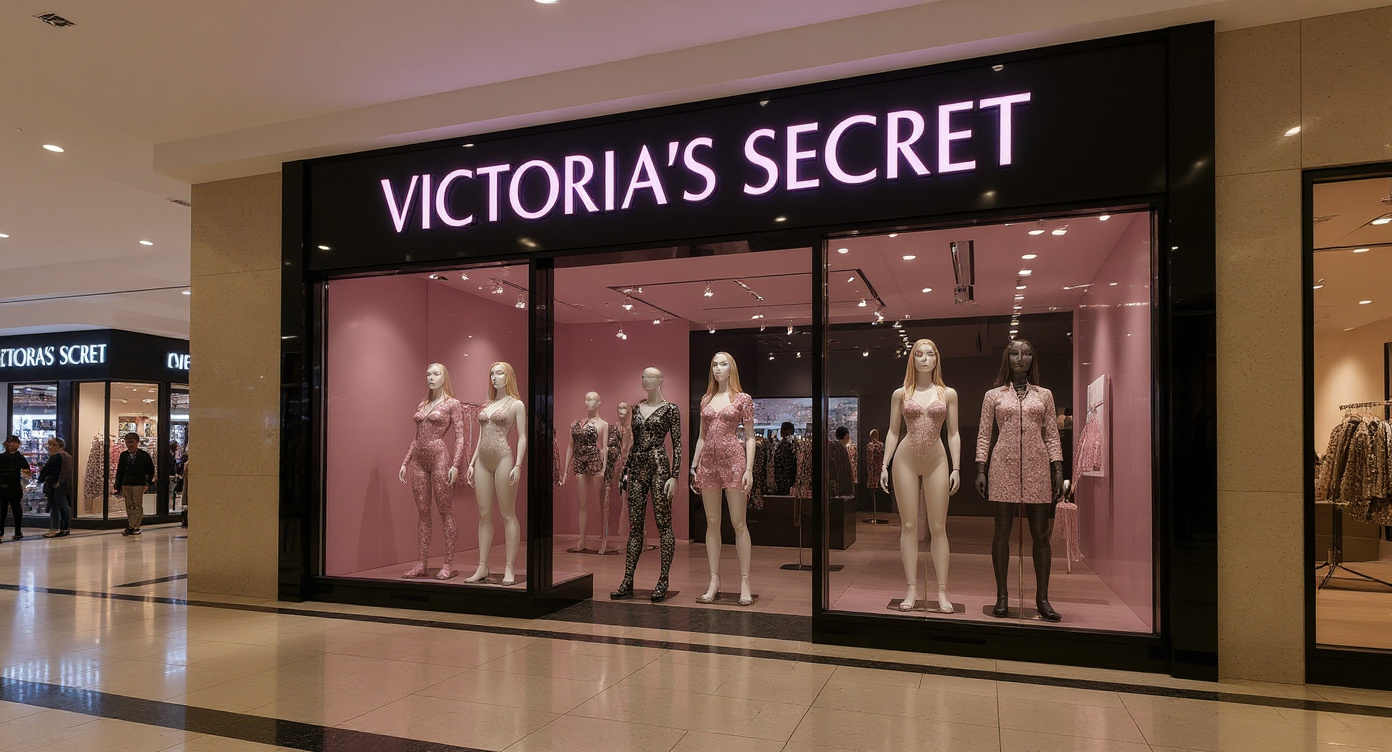
Victoria's Secret has officially completed the most predictable corporate comeback in American history — ditch the gender studies curriculum, go back to selling lingerie, and watch the stock price triple. The company's shares have surged 145% over the past year under CEO Hillary Super, who apparently did the unthinkable and asked, "What if we just sold underwear again?"
Someone give that woman a Nobel Prize in Common Sense.
For those who mercifully blocked out the woke era, here's a refresher. Back in 2021, Victoria's Secret axed its iconic Angels program — the supermodels who had built the brand into a cultural juggernaut — and replaced them with the "VS Collective," a roster of "body-positive" ambassadors that included a transgender model. The famous fashion show, canceled in 2019, was declared dead and buried. The message from corporate was clear: selling aspirational beauty was problematic, and the real product was social justice.
Customers responded exactly how you'd expect. They stopped buying.
The stock cratered to a 52-week low of $17.53. The brand that once dominated the lingerie market was bleeding out on the sales floor while executives patted themselves on the back for being "inclusive." Turns out "inclusive" doesn't pay the rent when nobody's walking into your stores.
Then something miraculous happened. Victoria's Secret looked at the balance sheet, looked at the empty stores, and decided that maybe — just maybe — customers wanted to buy lingerie from a lingerie company, not attend a sensitivity training seminar.
The fashion show came back. The supermodels came back. The brand started acting like a brand again instead of a nonprofit with a push-up bra section. And wouldn't you know it, the money came flooding back too.
Q1 revenue hit $1.56 billion. The company raised its full-year guidance to between $7.03 billion and $7.13 billion. The market cap ballooned to $4.3 billion. JP Morgan slapped an "Overweight" rating on the stock and raised its price target to $88 per share. The average analyst target now sits at $65.78, and the stock is trading around $54.30 — which means Wall Street thinks there's still room to run.
Let me put the 1-year return in perspective: Victoria's Secret gained 145.04% while the S&P 500 gained 23.42%. That's not a comeback. That's a speed run.
The company is so confident in its rebirth that it's even changing its ticker symbol from VSCO to VSXY. That's right — they went from hiding from their own brand identity to literally putting "sexy" in the stock ticker. You cannot make this up.
This is the go-woke-go-broke thesis in its purest, most beautiful, mathematically provable form. The stock chart reads like a morality play. Chapter one: company abandons what made it successful to appease people who were never going to buy the product anyway. Chapter two: revenue collapses. Chapter three: company remembers that its actual customers exist, pivots back, and prints money.
Every corporate boardroom in America should have this chart framed on the wall. Right next to the earnings report.
The left will tell you that "go woke, go broke" is just a right-wing talking point. They'll say it's an oversimplification. They'll write think pieces about how the brand pivot was "more nuanced than that." Fine. Explain the 145% stock surge then. Explain why every single financial metric reversed the moment the company stopped lecturing its customers and started serving them.
We'll wait.
Hillary Super didn't reinvent the wheel here. She just stopped setting it on fire. And for that, shareholders are being rewarded handsomely while the architects of the woke rebrand quietly update their LinkedIn profiles.
The lesson is simple, and corporate America keeps learning it the hard way: your customers are not your students. Sell them what they came to buy, or someone else will.